How energy efficient is your home?
Even if it is an older house that wasn’t designed with energy efficiency in mind, there are ways that you can improve sustainability and make it more energy-efficient.
You can implement some of these measures yourself, like replacing outmoded energy-hungry appliances and gas-guzzling heaters, while more complicated heating and cooling systems will need some input from professionals who offer mechanical engineering services or skilled tradesmen who work in the plumbing and electrical sectors.
Generally, energy-efficient homes are comfortable in all weather conditions throughout the seasons. Energy for active technology systems for heating, cooling, ventilation, lighting and so one is generated from renewable sources, but wherever possible, passive systems are used.
Embracing Passive Design Technologies
Passive design minimizes the use of active systems that draw on fossil fuels including coal for electricity and natural gas for heating. Although there are steps that can be taken to improve the passive design of existing houses, when new homes are designed, the architect or designer will consider the climate of where you live and will take other factors into account including prevailing wind conditions and typical humidity levels.
Often referred to as passive solar design, it also involves harnessing the heat of the sun to keep occupants warm in winter and minimizing this same heat when it is hot in summer so that occupants will always be in a comfortable environment.
Other important factors of passive design include:
- The orientation of the house and how it is positioned on the lot. Generally, in the northern hemisphere, north-facing rooms will be cooler, so living areas should ideally face north or towards the equator. While orientation cannot be changed once the house has been built, internal renovations can alter the use of some rooms.
- Windows play an important role, but unless major renovations are undertaken, you’ll be stuck with the original design unless you are building a new home. Nowadays, codes and regulations govern the size of windows and determine whether double glazing is mandatory. Retrospectively, windows can be coated to minimize emissivity.
- Roof and window overhangs will help to produce shade on the south side of the house, and even the east and west sides that can get hot in the summer months. They shouldn’t, however, block out all the sun in winter. Overhangs can be designed as part of the building, for instance, roofing that extends away from the walls. But awnings, shutters, and louvers can also reduce heat gain very effectively.
- Landscaping can be remarkably effective. For instance, deciduous trees will provide shade in summer but allow the sun to shine through to the house in winter, while evergreen trees and large shrubs can be used as a windbreak and to provide shade. Generally, native species should be planted.
- Lighting is a central element of passive design since allowing natural light to shine through windows, skylights and so on reduces the need for artificial lighting. When artificial lighting is used, it is essential that smart energy-efficient LED (light-emitting diode) or CFL (compact fluorescent lamp) light bulbs are chosen, because they provide long-lasting light that saves energy. They also produce less heat and therefore lessen the need for interiors to be artificially cooled.
- Natural ventilation can be a very effective way of cooling a house, either by designing for cross-ventilation or for stack-effect cooling where the hot air rises and escapes through low-level and/or roof vents.
Thermal Building Envelope
One of the most important elements of any energy-efficient house is that it must form a tightly-sealed thermal envelope, with a high R-value, to maintain internal temperatures at around 19 C and 25 C 24/7. Insulation in the roof and walls and even the foundation slab of the building is important, as is weather sealing that prevents air and energy from escaping and unwanted heat or cold from entering.
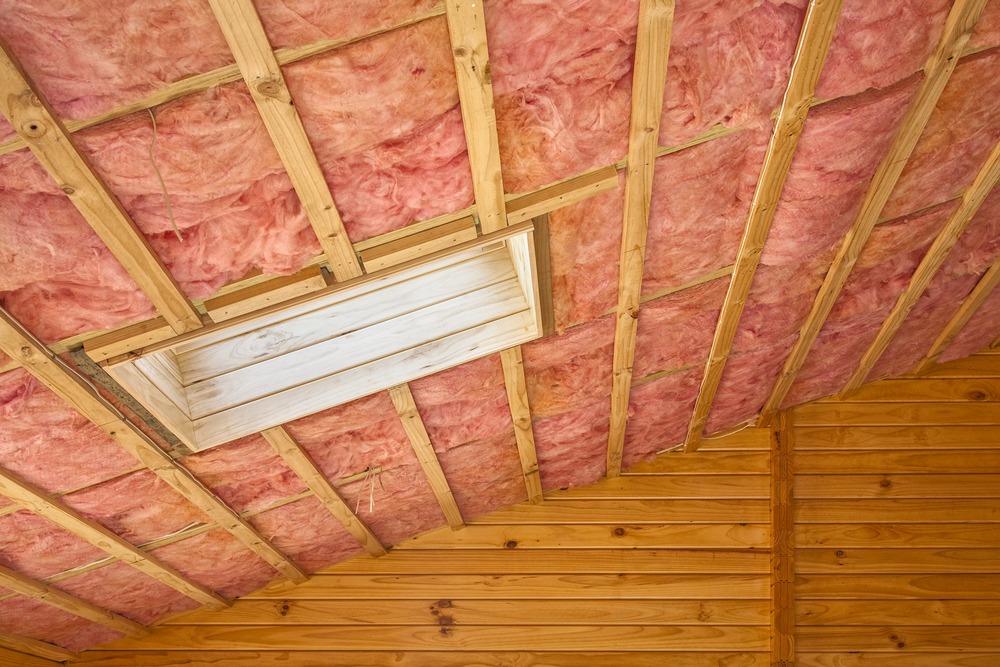
If the house is old and insulation inadequate, there are ways to install insulation under the roofing or in the ceiling.
Drafts should also be prevented. That said, it is vital that weather sealing doesn’t result in poor ventilation that will lead to the accumulation of moisture or to the development of mold or fungus inside the house. This, quite simply, will make the occupants sick.
Because energy-efficient houses are tightly sealed, heating, ventilation, and air conditioning (HVAC) systems (which are active rather than passive systems) need to be correctly designed by an HVAC engineer. Systems must be controlled to prevent any possible health risks. In fact, HVAC systems in our homes are one of the most effective ways of ensuring that air quality is always good, keeping the internal environment healthier than it would otherwise be, although they are not usually necessary in smaller houses.
The efficiency of these systems is one of the factors that result in the cheaper running of our homes. So, too, will the use of energy-efficient appliances that use less energy and water.
However, using conventional electricity to run these systems wastes energy and money. The answer here is to use renewable technologies like solar energy with photovoltaic panels, wind turbines, or biofuels. Using solar rather than electric water heaters is an easy and relatively inexpensive step to take. Heat pumps are an ideal choice for heating because they are safe and don’t emit harmful greenhouse gases.
Advantages of Energy-Efficient Homes
Energy-efficient homes are well insulated so they are comfortable and temperatures are more stable. They are also quieter because of the insulation factor.
Not that long ago they cost a lot more to build than conventional houses, but costs have been decreasing steadily along with the increased availability of suitable materials. And there is no argument that energy-efficient homes are cheaper to run.
But even more importantly, energy-efficient homes feel healthier and there is considerable evidence that the health of occupants is better. For instance, they have fewer headaches and respiratory problems.
So, if your home isn’t energy efficient, this is what you can look forward to if you build a new house or take steps to make an old one more energy-efficient during renovations.
Read more about basix certificate apartment blocks.

Michael Tobias is the founder and principal of Nearby Engineers and New York Engineers, an Inc 5000 Fastest Growing Company in America. He leads a team of more than 30 mechanical, electrical, plumbing, and fire protection engineers from the company headquarters in New York City, and has led numerous projects in New York, New Jersey, Chicago, Pennsylvania, Connecticut, Florida, Maryland, and California, as well as Singapore and Malaysia. He specializes in sustainable building technology and is a member of the U.S. Green Building Council.

I’m a 20-something stay-at-home mother and wife. I have an amazing husband, a beautiful daughter, two loving dogs, and a lazy cat. I wouldn’t change my life for anything! I love to read, listen to music, cook and blog!


Speak Your Mind