Selective mutism in teenagers is not simply a very shy case; it is an anxiety disorder that prevents the adolescent from communicating in some social situations, even if he or she wants to. Parents may suffer a lot watching their child at home being talkative and at school or in public not uttering a word.
This silence may appear strange but is actually a strong indicator of social anxiety rather than a sign of bad behavior or stubbornness. A good thing is that selective mutism is treatable and with proper therapy, patience, understanding, and support, the majority of adolescents will regain their self-esteem and voice.
This article reveals the causes of selective mutism, the methods of identifying its symptoms, and what the parents can do to help their child speak comfortably again.
What Is Selective Mutism?

Selective mutism is noted as an anxiety disorder and for that reason a person with it will not speak in certain situations while at the same time they would be able to talk very well in other places. To illustrate, a young person may have no problem communicating at home but remain totally mute in school or at public places. This non-communication is not a refusal or a sign of disrespect, it is instead a reaction to the highly anxious situation that is beyond the person’s control.
The problem usually begins in very small children and if there is no treatment it could last until the teenage years. During the stage when the teens are developing, socializing becomes a priority and the fear of ridicule or being judged can make it even harder to say something. If identification is early and emotional support is given, the latter can be a very strong factor to assist the young person to face this problem and reclaim their self-confidence in socializing.
Screen-Free Activities That Spark Imagination and Patience in Kids
Causes of Selective Mutism in Teens
The primary factor of selective mutism is severe social anxiety. The young individuals who experience this condition are generally terrified of being evaluated, ridiculed, or making errors while communicating. Besides that, genetics can also be a cause as anxiety disorders do have a hereditary trait. The impact of certain environmental factors, such as changing schools, being bullied, or having high academic expectations, can increase the severity of the condition.
Non-assertive or timid teenagers are more prone to the onset of selective mutism, particularly if they encounter difficulties in speech or language causing communication to be less engaging. In very few cases, trauma or emotionally distressing experiences may play a role, but it is more typical for the disorder to start from an acute situation that leads to chronic anxiety.
Recognizing the Signs of Selective Mutism
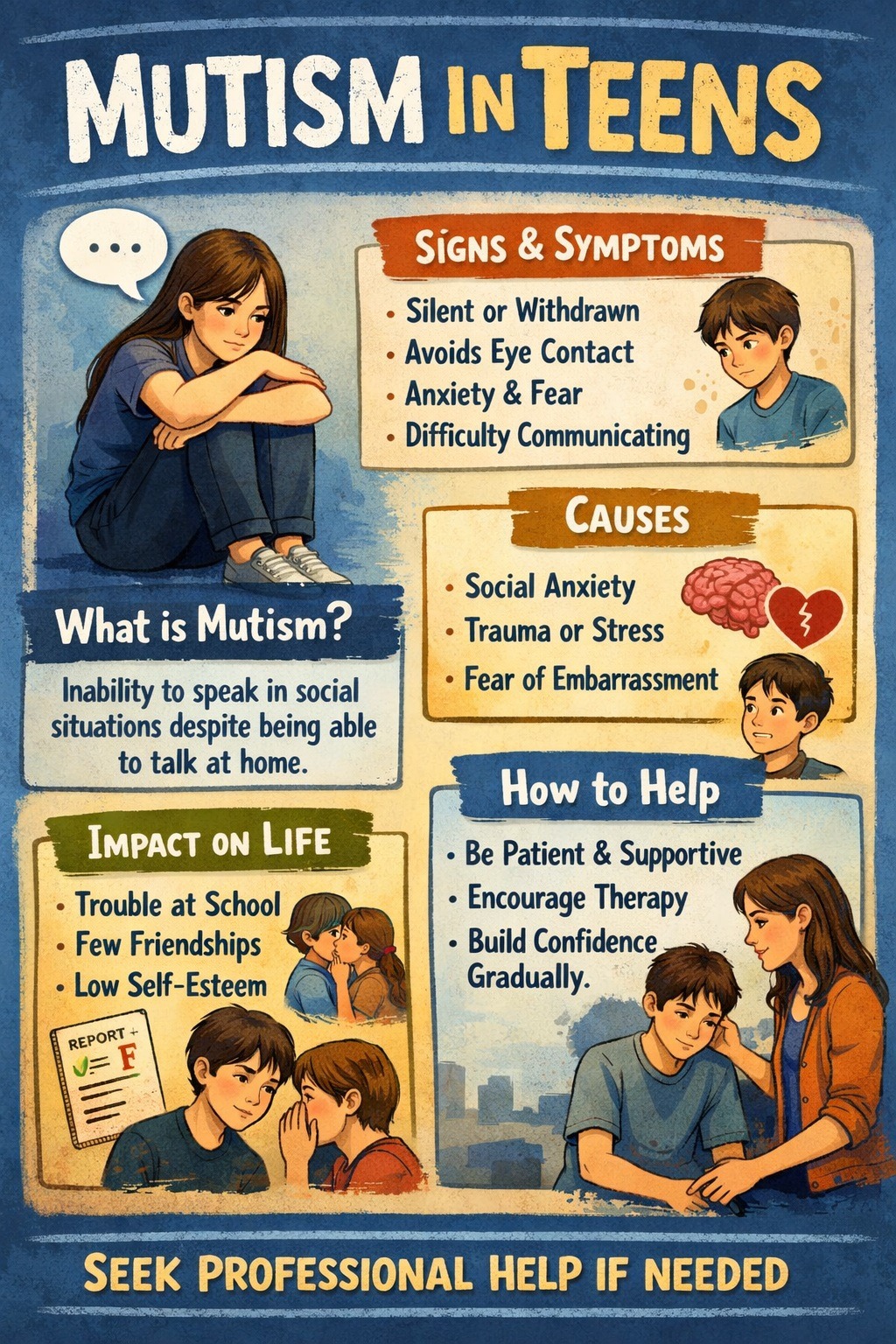
Selective mutism can sometimes be easily confused with the issues of control or even just hiding the whole problem. The feature that stands out the most is the regular mute behavior in particular places while in others the person can talk without any limitations theoretically.
A teenager can communicate freely with family members at home but in classrooms, at social gatherings or in the street he/she can be a person of few words. They may not use their voice at all but rather silently conduct a conversation using gestures, nodding, or writing.
They usually shun the eye and show the physical signs of stress in a manner that the audience can almost feel it—e.g., fidgeting, sweating, or going completely still—when they are supposed to talk. Gradually, this silence will turn into isolation and psychological problems such as academic failure, and low self-esteem, if the situation is misunderstood or neglected.
Top 7 Things To Do with Kids in Copehagen
Diagnosis and Evaluation
Diagnosis is generally made through the observation and interviews conducted by a psychologist, psychiatrist, or speech-language pathologist. They look for a silence of one month in the areas where speech is expected, with the sole exception of the initial adjustment period to a new environment.
The procedure for assessment is asking parents, teachers, and sometimes even classmates to tell about the child’s behavior in different situations so as to get a clear picture of the child’s behavior in different situations. The professionals also rule out autism, speech, and hearing problems, which guarantees that the diagnosis is correct. The goal is to find out whether the silence is due to fear and uncover any other issues that might need assistance.
Treatment and Management
The treatment of selective mutism is aimed at anxiety reduction and confidence building through communication. Cognitive behavioral therapy is one of the great methods, in this case, the teens are helped to identify and regulate their anxiety-fueled thoughts and to practice minor steps towards speaking.
Gradual exposure therapy helps them to meet the dreaded situations at their speed starting with whispering or nonverbal communication and finally ending with speech. Family therapy is often the way for parents to find out how to support their children in the learning process, encouraging them to speak without putting any pressure. Speech therapy can also be part of the treatment if the anxiety is rooted in communication problems.
In the most severe cases, physicians may suggest medicating the patient to help with anxiety management, but therapy will always be the primary treatment. The progress achieved in therapy should not be seen as the result of forceful attempts getting the teen to talk, but rather it should be taken as the result of the mix of patience, understanding, and constant encouragement.
Top Vacation Ideas for Kids: Fun Family Getaways
How Parents Can Support Their Teen
The parents take a major part in the fight against selective mutism of their child. The very first step is to remain composed and patient, and not to take speaking as a reason for pressure or punishment. Little forms of participation, like nodding or providing short answers, are indirectly encouraging and hence help in building comfort slowly.
Stress-free surroundings at home together with confident and relaxed communication also make a difference. The parents should communicate with the teachers closely to make sure that the student’s progress is being backed up but without causing attention or embarrassment at school. Assistance from therapists can give effective ideas for home use. Many young people do eventually start talking in the initially overpowering situations after time, understanding, and consistent support have been given.
Conclusion
Selective mutism is a circumstance that is not happenstance but a difficult and perplexing ordeal that affects the adolescent and his/her parents likewise. The way is long and every little step matters. If the parents, teachers, and therapists work together, they will make the teenager’s voice sound naturally by developing a secure and encouraging environment. It is a silent submission, not an opposition, with a picture of fear behind it. By shifting the pressure with an understanding, families can help their kids to conquer their fears and to be the world again.

Hey welcome to my blog . I am a modern women who love to share any tips on lifestyle, health, travel. Hope you join me in this journey!


Speak Your Mind