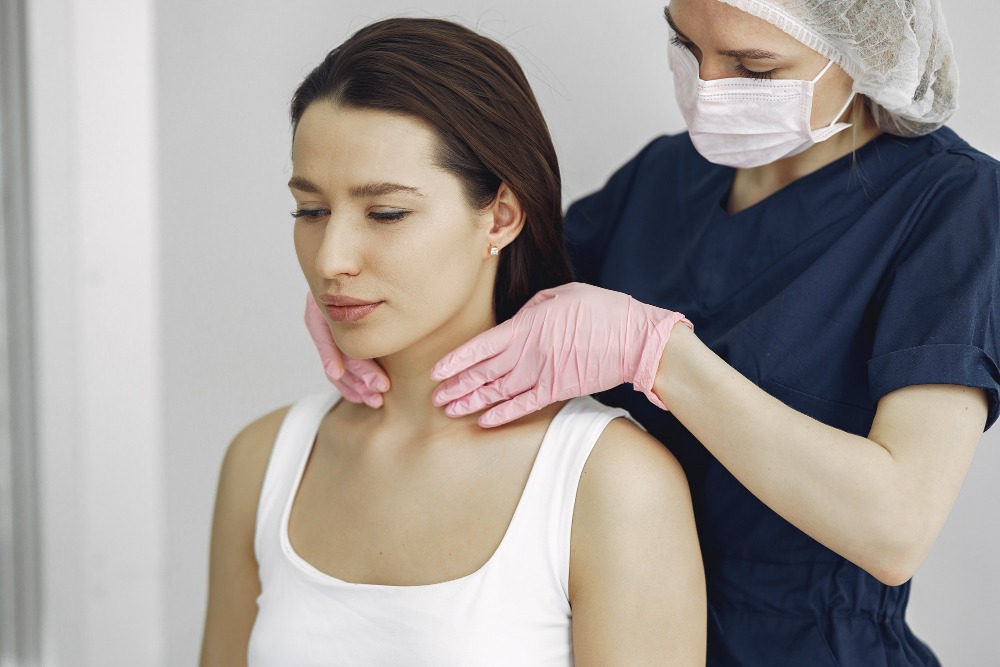
In cervical assessments, precision is paramount. One tiny error and the whole clinical picture starts to blur. Anyone who has tested cervical mobility long enough knows how quickly two evaluations of the same patient can drift apart.
So, how can we reduce assessment variability with the help of sensor-based cervical testing? We’ll talk about that in-depth in this blog.
Why cervical assessment variability persists in clinical practice
Variability in measurements begins even before the test starts. Manual goniometry and visual estimation rely heavily on the clinician’s technique, the patient’s cooperation, and consistent positioning. Even slight changes in how the clinician aligns the device can lead to different endpoints. Factors such as fatigue, subtle biases, and varying levels of training can further widen these discrepancies.
Additionally, patient effort can vary significantly. In one session, a patient may fully push to their true end range, while in another, they may hold back due to fear or pain. This inconsistency results in a set of readings that do not accurately reflect a single, stable baseline.
Hidden diagnostic costs of subjective cervical range measurements
When measurements fluctuate, diagnoses become less clear. Subtle mobility losses are easy to overlook, resulting in delays in targeted treatment. Insurance documentation frequently requires objective evidence of change; subjective measures can undermine that evidence and complicate reimbursement.
Imaging and clinical records may seem inconsistent when exam results vary. Clinicians end up spending more time justifying their decisions and creating cautious treatment plans that attempt to account for this measurement uncertainty.
How sensor-based testing establishes reliable measurement boundaries
Sensor tools minimize many variables that depend on human input. Micro-calibration ensures that the device provides consistent readings across different sessions. Using axis tracking and standardized mounting reduces errors that can occur due to changes in position. High-frequency sampling captures the motion curve rather than just a single endpoint. In practice, a cervical range of motion instrument can deliver the same reading when used by various clinicians or during repeated tests. This reliability establishes a fixed reference point that clinicians can trust.
Objective motion profiles that strengthen clinical judgement
Sensors provide more than just degree measurements; they generate motion profiles that highlight rate, acceleration, and the overall shape of movement. These profiles help differentiate between guarded motion and true stiffness.
Objective end-range thresholds become valuable clinical markers instead of mere estimates. Clinicians can utilize these thresholds to narrow down differential diagnoses and determine whether symptoms are caused by joint limitations or deficits in neuromuscular control.
Reducing uncertainty in return to activity decisions through sensor data
Sensors provide more than just degree measurements; they generate motion profiles that highlight rate, acceleration, and the overall shape of movement. These profiles help differentiate between guarded motion and true stiffness.
Objective end-range thresholds become valuable clinical markers instead of mere estimates. Clinicians can utilize these thresholds to narrow down differential diagnoses and determine whether symptoms are caused by joint limitations or deficits in neuromuscular control.
Visual outputs that support clinical reasoning
Visual plots convert raw signals into patterns that can be clinically useful. Angular displacement graphs illustrate compensatory movements, while velocity traces indicate sudden stops that suggest guarding behavior. By comparing session overlays side by side, clinicians can quickly recognize trends. This allows them to identify where motion begins to deteriorate and whether this deterioration occurs consistently across sessions. These visual tools enhance clinical reasoning and diminish the dependence on memory or descriptive narratives.
Collaborative value of sensor-derived evidence
Using objective data helps minimize disagreements among healthcare providers. When physical therapists, orthopedists, and pain specialists examine the same sensor data, they can make treatment decisions more quickly and effectively. This shared evidence simplifies the planning of multidisciplinary care. Additionally, it reduces the need for repetitive tests, as ongoing sensor records clearly show a patient’s progress without relying on repeated subjective evaluations.
Strengthening patient education with quantitative findings
Patients respond better to visual data and numbers. A graph is more persuasive than a verbal description. Quantitative feedback transforms vague goals into measurable targets, providing clarity that enhances adherence. Patients can clearly see where they started and what specific changes they need to make. This approach also minimizes misunderstandings regarding activity limits and expectations for progress.
Operational payoffs for clinics adopting sensor-based cervical testing
The operational benefits are immediate. Documentation becomes clear and defensible, making insurance audits simpler since reports contain objective graphs and metrics. Clinicians save time because a single sensor run can capture more comprehensive data than multiple manual tests. Additionally, fewer repeat assessments are necessary, as the readings remain stable across different practitioners.
Conclusion
Measurement variability can have significant costs in diagnosis, treatment, and clinic operations. Sensor-based cervical testing helps to reduce this variability by providing stable, interpretable, and shareable data. When clinicians rely on accurate numbers, their judgments become clearer, making it easier to justify their recommendations. This clarity benefits both the care team and the patient. Over time, it leads to improved outcomes because treatment can focus on measurable deficits rather than inconsistent impressions.

Hey welcome to my blog . I am a modern women who love to share any tips on lifestyle, health, travel. Hope you join me in this journey!

Speak Your Mind