Women who menstruate have developed a rhythm and pattern based on their periods over time, including how often they occur and what typically happens during the course of the monthly cycle. Sometimes, when a woman is expecting to have her monthly/period, it does not come at all, there may be indications that it may not be a typical menstruation but implantation bleeding. For example, if the amount of blood coming from the vagina is less than what is normal for a period or comes unexpectedly early, many women question whether they are experiencing an implantation bleed.
The mistake made by many women is thinking that an implantation bleed cannot occur until well after a missed period, as implantation bleeding often occurs just before a woman would be expecting her monthly cycle. If a woman is trying to conceive, not knowing if there has been a positive response through implantation or has symptoms of pregnancy can be quite confusing.
By reading this article, you will have a better understanding of what surgical implantation bleeding is and how it differs from a typical monthly cycle. This article provides you with explanations of how to identify an implantation bleed as the small differences between the two types of bleeding will help determine which one you may be experiencing.
How Behavior Changes Can Signal Child Sexual Abuse
What Is Implantation Bleeding?

A fertilized egg attaches itself to the uterus after fertilization, causing implantation bleeding. Tiny blood vessels in the endometrium can rupture during implantation and then bleed, leading to small amounts of blood appearing during the first few days to a week afterwards. The amount of blood in implantations is generally lighter than with normal menses.
Implantation occurs about 10-14 days after ovulation occurs (which generally coincides with the same time most women expect their next menses). While there are some women that may not have any bleeding from an embryonic implant, for those women that experience it, they will more than likely be aware that they are pregnant because of the occurrence of implantation bleeding.
Why Implantation Bleeding Gets Confused With a Period
1. The Timing Is Almost Identical
Implantation happens during the “two-week wait” — the stretch between ovulation and an expected period. Because timing lines up so closely, it’s natural to assume that any spotting is just menstrual bleeding arriving early or lightly.
2. Both Can Start With Light Spotting
For a lot of women, before their steady flow kicks in, their period often starts with a lighter flow. Implantation bleeding looks similar, making it easy to dismiss as a normal cycle variation.
The key difference? Implantation bleeding never develops into a heavier flow. It stays light from beginning to end.
3. The Colour Can Overlap
Implantation bleeding tends to be light pink, brown, or “rusty” in appearance. Especially at the beginning or end of the period cycle, it can also appear brown or muted red. Without close inspection, the two can look practically identical.
4. Cramping Can Confuse Things Further
Mild cramping sometimes comes with implantation which is very similar to menstrual cramps, many chalk up this discomfort as a sign their period is starting.
5. Everyone’s Cycle Behaves Differently
Some people regularly have very light periods. Others experience spotting before the main flow. If your natural pattern already includes variability, identifying implantation bleeding becomes alot harder to pin-point.
Describe the procedure of liver function test and normal range chart
Key Differences Between Implantation Bleeding and a Period
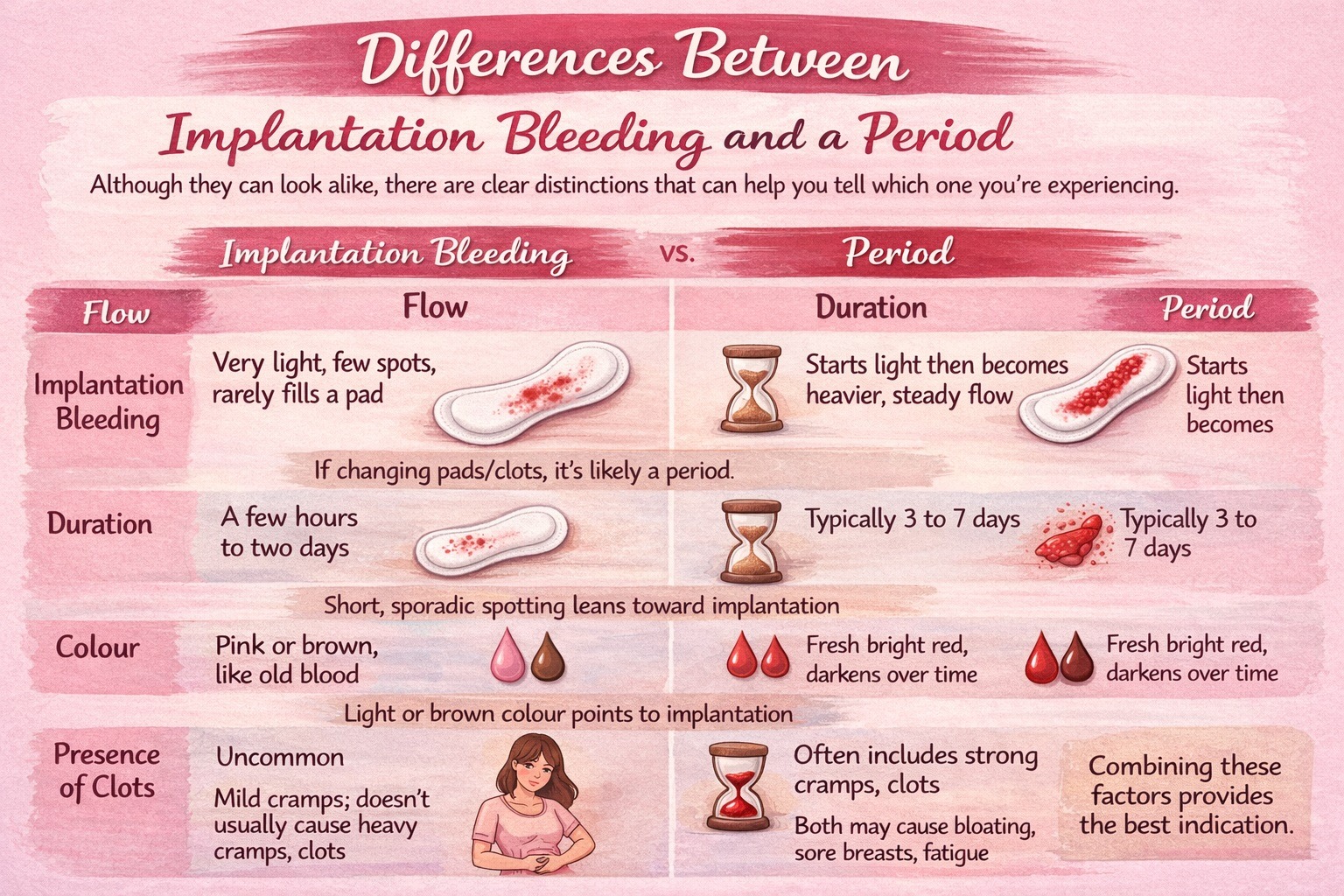
Although they can look alike, there are clear distinctions that can help you tell which one you’re experiencing.
1. Flow
Implantation bleeding: Very light, usually just a few spots, rarely enough to fill a pad.
Period: Begins light but progresses into a heavier, steady flow.
If you find yourself changing pads or seeing clots, it’s almost certainly a menstrual period.
2. Duration
Implantation bleeding: A few hours to two days.
Period: Typically three to seven days.
Short, sporadic spotting leans more toward implantation.
3. Colour
Implantation: Pinkish or brown, resembling old blood.
Period: Fresh bright red at first, darkening over time.
If the colour stays consistently light or brown without turning into bright red flow, implantation is more likely.
4. Presence of Clots
Clots are very uncommon in implantation bleeding, but common during menstruation. Their presence almost always indicates a period rather than early pregnancy.
5. Other Symptoms
Early pregnancy and PMS can mimic each other — bloating, breast tenderness, fatigue — so symptoms alone aren’t reliable. But implantation bleeding usually comes without the typical heavy cramps that accompany many periods.
The Best Toothpastes to Effectively Reduce Plaque Build-Up and Improve Oral Health
Can Implantation Bleeding Actually Be a Period?
Diverse factors occur in conjunction that can cause a woman to skip her normal menstrual cycle; i.e. an occurrence of unusually light cycling.
Stressors such as stress; changes in hormones; travelling long distances or having an illness can be placed together as multiple forms through which to comprehend a woman’s menstrual cycle. This level of ambiguity can create many instances wherein a person assumes their cycle was from being pregnant (implantation) rather than experiencing a very light menstrual flow.
As it is easy for these misunderstandings to occur; therefore, understanding the typical flow pattern should give the best representation of what is going on in the body:
In general, the flow pattern will be lighter (meaning “less blood”) and shorter duration than what you would expect from a “normal” menstrual flow.Period bleeding grows heavier and lasts longer.
If you notice bleeding that seems odd for your usual pattern, especially if it lasts only a day or less, implantation becomes a possibility — assuming pregnancy is possible.
When Should You Take a Pregnancy Test?
If you notice light spotting around the time your period is due and start wondering whether it might be implantation bleeding, it’s natural to want to take a pregnancy test right away. The trouble is that testing too soon often gives a negative result simply because hormone levels aren’t high enough yet.
A good rule of thumb is to wait about 2–3 days after the spotting has ended before using a home pregnancy test. By then, your body usually has enough hCG — the hormone these tests look for — to show a more accurate result.
If you want answers sooner, a blood test at a clinic can pick up pregnancy earlier than an at-home test, so that’s another reliable option.
When Should You Contact a Doctor?
Most light spotting isn’t dangerous. But there are times when you should seek medical advice:
- Bleeding that becomes heavier over time
- Bleeding that lasts longer than three days
- Sharp or persistent abdominal pain
- Dizziness or fainting
- Bleeding accompanied by fever
These symptoms could point to something other than implantation or menstruation, such as infection, hormone imbalance, or in rare cases, ectopic pregnancy.
If in doubt, it’s always safer to speak with a healthcare professional.
Emotional Confusion Around Implantation Bleeding
Feeling confused about implantation bleeding can lead to excessive amounts of stress. When trying to conceive, even minimal spotting may excite or frighten you. Conversely, if pregnancy is not in your plans, having an abnormal appearance with random spotting can appear distressing and surprising.
By learning more about the characteristics of typical implantation bleeding, you can eliminate a lot of unnecessary stress off of your mind because now you’ll actually know what to look for. You’ll know when to take a test, how long to wait before taking a test, and when you need to seek medical assistance or support.
Final Thoughts
It is very likely that you will confuse implantation bleeding with your monthly bleeding (period), as the timing, colour, and mild symptoms can all present very similarly to the beginning of your monthly bleeding.
1) Implantation Bleeding is generally a light amount of blood, short duration, and gets no heavier or longer in duration.
2) Monthly bleeding is generally a heavy amount of blood, lasts for a minimum of 3 to 5 days (typically), and gets progressively heavier as the days go by.
3) Both can be similar in colour and symptoms which can complicate differentiating between them.
4) In order to know for sure, the best way is to wait a couple of days and then take a home pregnancy test or contact a qualified medical professional.
Every woman/individual is unique and will have their own unique cycle. If for any reason you are feeling confused about abnormal bleeding (from IB or otherwise), you should seek out either home pregnancy testing or qualified medical guidance or assistance.

Hey welcome to my blog . I am a modern women who love to share any tips on lifestyle, health, travel. Hope you join me in this journey!


Speak Your Mind