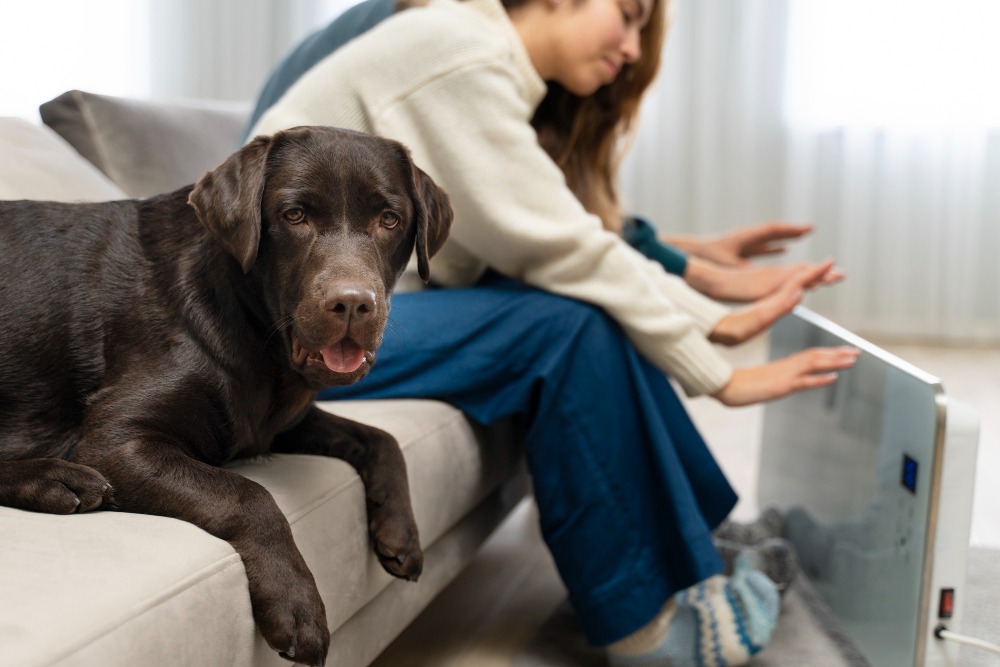
Keeping your home warm shouldn’t come with hidden risks for your family. When heaters aren’t working exactly as they should, small issues can quickly turn into safety hazards, especially for kids and pets who spend more time close to the floor and heat sources. Understanding the warning signs that point to heating repair needs can help you catch problems early and keep your home both comfortable and safe.
Why Heat Safety Matters for Kids and Pets
The biggest risk isn’t just heat, it’s unpredictability. Heating systems cycle on and off, spike in temperature, and often sit at floor level or within reach, exactly where kids crawl, play, nap, or stretch out and pets lie down. That’s why heat safety for kids and heat safety for pets require extra attention in family homes. Kids and pets don’t recognize danger zones the way adults do; to them, a heater is warm, interesting, and familiar. Even systems that function properly can become risky when heat output fluctuates, surfaces become hot to the touch, or airflow is restricted, turning basic heating safety into a real concern.
Another overlooked factor is false familiarity. A heater that’s been “fine for years” can suddenly become dangerous as systems age, due to wear, dust buildup, airflow changes, or small issues like a blocked vent, loose panel, or thermostat malfunction, problems that regular furnace maintenance is designed to catch early. These changes can cause heaters to run hotter than intended, undermining overall heat safety and increasing risk without obvious warning.
Common Heating Safety Risks in Family Homes
Physical contact risk is the first red flag. If a heater’s surface becomes hot enough that you wouldn’t keep your hand on it comfortably, it’s too hot for a child or pet, since burns happen fast, especially to paws, noses, and curious hands. Exposed elements, loose grilles, sharp edges, rattling panels, or visible debris inside vents increase the chance a child can touch something they shouldn’t or a pet can get caught, burned, or contribute to overheating near ground level. These conditions directly affect heat safety for kids and heat safety for pets, especially in homes where heaters are easily accessible.
Any heater that produces sudden temperature spikes or uneven heat distribution should also be treated as a risk. Surfaces that heat up quickly, remain hot after shutting off, or vary significantly from room to room make maintaining proper home heating winter safety more difficult, and in older or consistently problematic systems, these issues may signal that furnace replacement is the safer long-term option rather than continued repairs.
When Heat Safety Becomes a Serious Concern
As a general rule, anything above 120°F on an exposed surface is a burn risk, especially for kids and pets with thinner skin or sensitive paws and noses. Many heaters exceed this temperature easily, particularly baseboards, radiators, and wall-mounted units. This is why heating safety isn’t just about comfort, but about managing exposure and accessibility, something a professional furnace service can help assess and correct when temperatures or airflow aren’t operating within safe ranges.
What matters most isn’t just peak temperature, but how accessible the heat source is. Surface accessibility matters as much as temperature, since a moderately hot surface at floor height presents a higher risk than a hotter component that is fully enclosed and inaccessible. Pets and young children may not withdraw immediately from heat, making heat safety for kids and heat safety for pets critical considerations when heaters are easy to touch, lie against, or block with toys, blankets, or pet beds.
Baseboard Heater Covers for Child Safety
Baseboard heaters are common, and commonly underestimated. They can be safe when properly maintained and protected, but their biggest risk is location: they sit right at crawling, tail-wagging, nap-level height. Without covers, baseboards can cause burns, trap fur and debris, or overheat when airflow is blocked by toys, pet hair, furniture, or bedding. These risks directly impact home heating winter safety in households with children and animals.
Properly installed baseboard heater covers reduce surface temperature, prevent direct contact, and help maintain consistent airflow. This simple upgrade significantly improves heat safety and supports safer indoor environments for kids and pets.
Smells and Noises That Affect Home Heating Winter Safety
Some warning signs are subtle but serious. Persistent burning dust smells beyond the first few minutes of seasonal startup, as well as metallic or electrical odors, can indicate overheating or internal component stress and should not be ignored. Clicking, popping, buzzing, or grinding sounds that weren’t there before often signal mechanical strain, loose parts, or airflow restriction. These issues compromise home heating winter safety by making heat output less predictable and harder to control.
Uneven heating or frequent cycling on and off also points to internal stress, and stressed systems run hotter, less efficiently, and more dangerously. When systems behave unpredictably, both heating safety and overall heat safety are reduced.
How Pets Create Hidden Heat Safety Risks
Pets are experts at causing problems unintentionally. They shed, chew, dig, nap, and rub, all of which can interfere with heaters. Fur and dander clog filters and vents, reducing airflow and causing overheating, while pets may obstruct vents or block airflow by lying directly on heaters. These behaviors can seriously affect heat safety for pets and create secondary risks for children in the same space.
Dogs may chew thermostat wires or electrical cords, and cats gravitate toward warm surfaces that can block vents. Reduced airflow causes heat to concentrate, raising surface temperatures and increasing burn risk. Chewed wiring, displaced vents, and blocked returns all interfere with heating safety, even when something as simple as a pet bed pushed against a heater can trap heat and create a burn or fire risk.
Heat Safety Tips for Pets and Kids at Home
Smart heat safety is about layers of protection, not one rule. Effective heat safety relies on environmental control rather than constant supervision, since supervision is never perfect. Installing physical barriers or covers on accessible heaters, keeping vents and heaters clear of toys, blankets, and pet beds, and using thermostats with temperature limits or child locks all support better heat safety for kids and heat safety for pets.
Regular filter replacement and system cleaning prevent overheating caused by restricted airflow. Teaching kids that heaters are “no-touch zones” and reinforcing it consistently, along with positioning pet beds away from heat sources, strengthens everyday heating safety practices.
When Heating Safety Issues Mean Repairs or Replacement
If a heater shows repeated issues, runs inconsistently, or lacks modern safety features, it’s time to rethink it. Heaters that require frequent repairs, heat unevenly, or lack modern safety features should be evaluated for replacement, since older systems often don’t include automatic shutoffs, temperature limiters, or sealed components designed to protect heat safety for kids and heat safety for pets.
If you’re already spending money on frequent repairs, upgrading to a safer, more efficient system can lower long-term costs while improving home heating winter safety. Newer systems deliver more consistent temperatures and reduce the likelihood of surface overheating and unpredictable heat output.
Preventing Home Heating Winter Safety Problems Early
Pre-winter prep is one of the most powerful safety steps you can take. Pre-season preparation includes a professional inspection that checks for overheating risks, airflow problems, loose components, and electrical issues before the system is under full load. These steps are essential for maintaining home heating winter safety during periods of high usage.
At home, homeowners should test thermostats and safety shutoffs, clean vents and replace filters, install or inspect heater covers, and make sure carbon monoxide detectors work. A heater that’s inspected, cleaned, and protected before winter is far less likely to compromise heat safety, ensuring safer operation when kids and pets are spending more time indoors.

Hey welcome to my blog . I am a modern women who love to share any tips on lifestyle, health, travel. Hope you join me in this journey!


Speak Your Mind