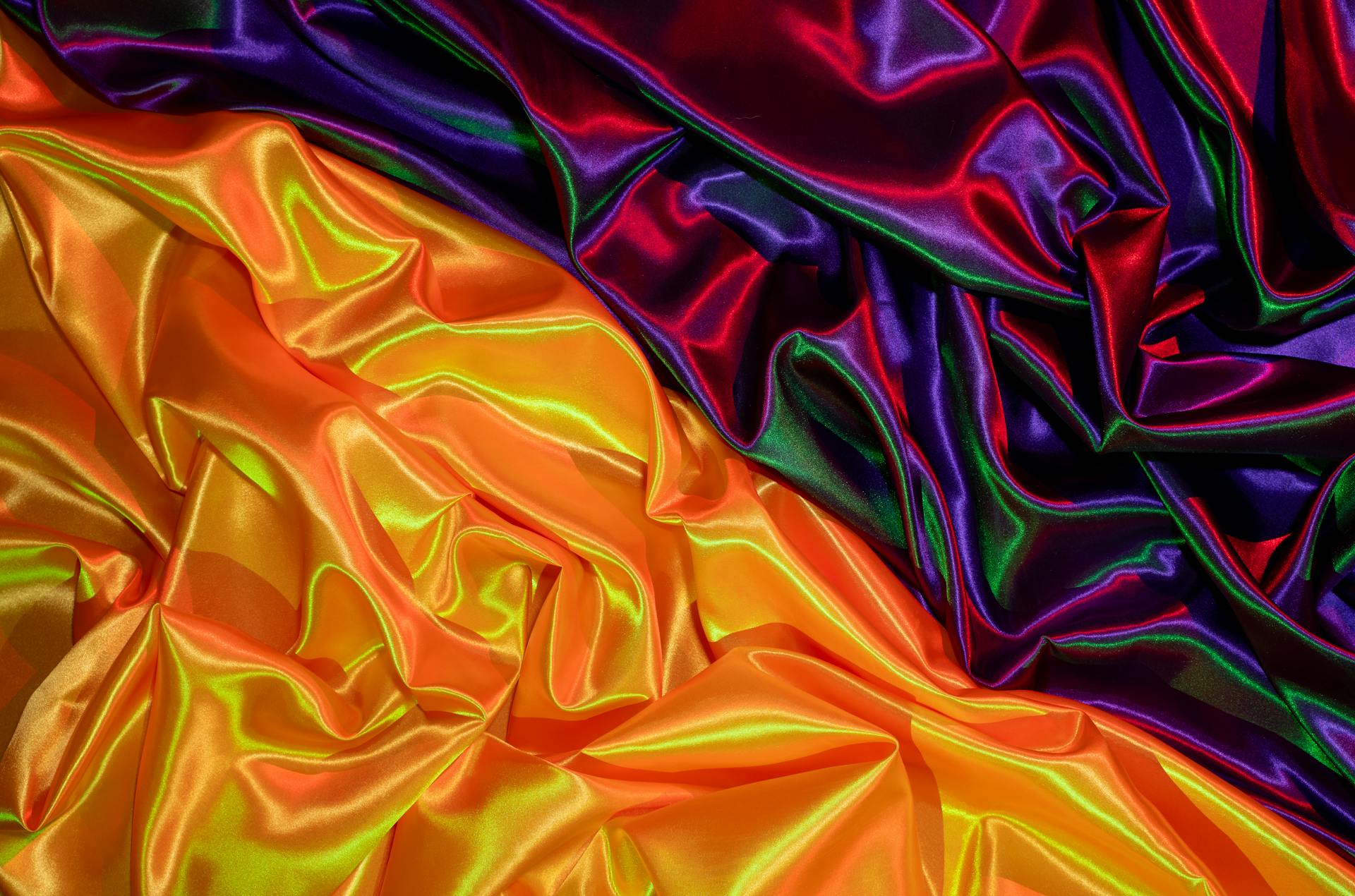
It seems like the debate between satin and silk has been going on for a very long time – we’re talking eons here – and we can’t really say who’s right. There are just too many similarities between these two materials and people just can’t seem to tell them apart when it comes to fashion or cosmetics. In this article we will try to get to the bottom of satin and silk; these fabrics or materials that look and feel just like real silk but aren’t quite the same thing at all. Keep reading to learn more.
Why does a silk pillowcase cost 5 times as much as a satin pillowcase? Why does this satin dress look more shiny than this silk blouse? Let’s have a closer look at fabrics and you’ll get the answer without needing a Fashion Degree.
So, what’s the real deal with satin vs silk?
First Things First: Fiber vs Weave
One of the biggest misconceptions with satin vs silk is that they’re debating two fabrics within the same category. They’re not.
Silk is a natural fiber made from the cocoons of silkworms, specifically Bombyx mori. Inside the cocoons are protein fibers they spun from their mouths. The cocoons are harvested and the fibers are reeled and re-spun into a yarn which is then woven and knitted into fabric. Silk has been a popular textile material for over 4,500 years, and was valuable enough to be sought after by numerous trading empires.
Satin is not a type of fiber. Satin is a type of weave structure. The term satin refers not to the yarn materials, but to the specific method of weaving that creates the satin fabric. Although often associated with satin weave made of silk, it is possible to make satin fabrics from many different types of man-made fibre materials including polyester, nylon, and rayon. Satin weave creates a shiny satin face with an uninteresting velvety backing.
The Feel: Softness, Slip, and Skin Contact
Both satin and silk are considered to be very soft fabrics. Although they feel very soft to the touch they are slightly different.
We know that sounds strange but trust us when we say that silk is uniquely soft in a way that you have to experience to really get. It’s more than just smooth. It’s not silky (in the slippery sense). And it’s not lightweight in a plastic way. Our silk fabrics drape in a way that’s incredibly natural to the body, regulating body heat beautifully and feeling gentle against your skin. People often describe it as having a dry smoothness – as if it’s caressing the skin in a way that doesn’t feel at all artificial. Our silk never clings or holds an unnatural shape against the contours of the body.
Polyester satin fabrics are generally more slippery to the touch. We find this type of glide in very formal dresses and some kinds of lingerie fabrics. Silk is the most famous of these kinds of fabrics but the feeling of satin will be quite cool to the skin whereas silk regulates the temperature more evenly. The fabrics in this category tend to be problematic in tropical weather.
Whether to go with silk or satin is basically a matter of personal preference. While silk is known to be less likely to cause irritation on sensitive skin, satin is considered to be more sensual.
Shine and Appearance
This week’s Tip and Trick is a really simple one but sometimes the simplest ones are the most fun to play with. All you need to do is turn on a light and hold up a piece of satin and a piece of silk. Try to guess what the difference is between the two. Hint: When you turn the fabrics side by side the satin will shine much more than the silk.
The sheen of silk is soft and almost flat rather than shiny. While other proteins may have an elongated crystal form that refractions light at many angles, the silkworm forms crystalline structures in the form of a triangle prism. These triangular prisms cause the light to be refracted at slightly different angles resulting in a flat sheen rather than a bright gloss.
Satin has a weave that reflects the light. Although it may look shiny, the shine really comes from the long floating threads on the surface of the material, creating a mirror-like sheen, often more dramatic and noticeable. This is one of the many reasons satin is used in evening wear such as night dresses and wedding dresses. It also looks great in photographs and the shine reflects the light and illuminates the surface of the fabric.
If you like things a little more understated and feel that silk is a more elegant fabric then Vinyl may not be for you. On the other hand, if you like to make a statement and have a fabric that gives a high shine finish that makes you look and feel glamorous then satin vinyl is your answer.
Breathability and Temperature Control
Comfort is not simply a matter of softness. It is a complex combination of attributes which evolve with use.
The exceptional ventilation qualities combined with moisture wicking properties of this Silk make it a truly versatile and unique fabric. Thus this Silk allows comfort throughout the year: in the summer, it is your lightest bedding layer; and in the winter, it warms you without making you sweat.
Breathability of satin is attributed to its fibres. Affordable polyester satin fabrics are not as breathable as silk. Because of the tighter weave and texture of polyester satin, it can lock heat and moisture close to the body which is not ideal for the hot sleeper or for humid environments. A satin made from silk will breathe well like other silk fabrics, but this type of satin fabric is always more expensive.
Temperature regulation is a bit different with silk, it’s generally smoother than other materials.
Durability and Longevity
You may think that silk is a very fragile material but in reality, silk is one of the strongest natural fibres. Because of this it also needs to be handled with more care. One of the simplest ways that silk fibres can be damaged is through exposure to too much sunlight, so it is generally recommended to keep fabrics made from it somewhere in the shade as long as possible. Washing silk fabrics also requires considerable care – as they tend to react badly to powerful surfactants contained in strong detergents and so always need to be cleaned with a very gentle product, such as perfume-free soapflakes, and gently rinsed while immersed in warm water; although materials like satin that have been doubled over while being sewn can begin to come apart if exposed to or rinsed in water, materials like Charmeuse which have only single layers, can still be effectively washed with very little risk. With a little bit of care however, silk materials can prove to be long-lasting for many years.
Ordinary satin made from synthetic fibers (especially polyester) is much less prone to wrinkles, shrinking and fading, which means it can be laundered more frequently and requires fewer special care instructions. This is why low-cost formal wear and cheap houseware items are so often made of satin fabric.
If you are looking for an easy care and very durable fabric, polyester satin might be what you are looking for. If you are willing to look after your fabric a little more and are wanting durability and comfort, then silk is an excellent choice.
Price Differences Explained
One of the largest factors that differ from satin from silk is price.
Why is silk so expensive? It’s really a matter of the time and effort that it takes to produce it. Thousands of silkworm cocoons are required to produce just a small amount of silk yarn. Extraction of the silk, spinning it into yarn and then weaving it into fabric, all require special skills and a great deal of care.
Satin made from polyester fabric is very inexpensive. Man made fibres are easily produced in large quantities which helps in curbing costs. Satin, even made from rayon or blends of silk and other materials, are generally much cheaper than pure silk fabrics.
As it turns out, opting for satin instead of gold, silver or bronze can be a cost-effective way to add some glamour to your new fixtures, if that is a factor.
Care and Maintenance
Silk is a lovely and versatile textile, but it is also fragile and requires careful maintenance. Most textiles made of silk will need to be hand washed or washed in cold on a gentle cycle using a mild detergent. It is important not to put them in the dryer because high heat can ruin them. Similarly, ironing textiles made of silk can be done, but again with caution and using a low iron setting.
This set of care instructions are applicable for every type of Satin material. Polyester satin is washed in the machine and can be mechanically ironed. Silk satin is to be treated like pure silk. Mainly because of the easier way of doing the laundry work, satin materials are preferred in daily application.
Ethical and Environmental Considerations
Because silkworms have to be boiled alive in order to obtain their cocoons, this fiber is often a source of ethical unease for many people. Although rare, naturally harvested silk which allows the silkworm to emerge is also known as “peace silk”. Peace silk is not often available or is very expensive.
The environmental impact of most synthetic satins is quite high, notably with petroleum based polyester fabrics. These fabrics have a large environmental footprint coming from the manufacture of chemicals that make up the structure of the fabric. Yes, even your expensive satin material clothing and bedding sheds millions of tiny plastic microfibers every time you wash it in a machine.
The debate between satin and silk is one that has been going on for as long as we can remember and one that always brings us to the centre of a heated debate. Environmentally speaking, which one is more sustainable and how can we tell? It all comes down to how and where they are sourced, as well as how you feel about the ethics of each.
Satin vs Silk Comparison Table
| Feature | Silk | Satin |
| Type | Natural fiber (from silkworms) | Weave structure |
| Feel | Soft, breathable, smooth | Slick, glossy, smooth |
| Shine | Subtle, elegant glow | High, mirror-like shine |
| Breathability | Excellent | Varies by fiber |
| Durability | Strong but delicate care | Durable (especially polyester) |
| Price | Expensive | Affordable to mid-range |
| Care | Requires gentle washing | Often easier to maintain |
| Best For | Luxury bedding, high-end clothing | Formal wear, décor, budget-friendly alternatives |
Which One Is Better for Hair and Skin?
Both silk and satin pillowcases are popular these days and claim to have the ability to reduce hair frizz and decrease wrinkles in the face while you sleep. Apparently, cotton is a bit more abrasive than silk and satin and so causes friction.
Silk is considered better at retaining moisture. The material has a lesser tendency to pull away moisture from the skin and hair in comparison to other materials. This ensures that the body retains moisture overnight without the material pulling it away quickly. Materials such as satin made from polyester also offer less friction. However, the material tends to cause overheating.
If you’re sleeping on silk for skin and hair benefits, you might be surprised to learn that it’s actually ever so slightly better than satin. That being said, satin is a great more affordable option that still delivers most of the benefits.
Making the Final Choice
Well, that’s the end of our satin vs silk debate. Well that is a simple question, but with some very complex and different answers. It really all comes down to what is important for you. If you care about using natural fibres, breathability of the fabric and a classic design, then silk will be the winner. If you prefer to spend as little money as possible, something that is durable to a certain extent and feels like a real true red carpet movie star, then you should choose satin.
When choosing between satin and silk materials, one generally considers the fashion and comfort of fabrics. Real Satin and Real Silk are often misled and confused by being called “Satin Fabric” and “Silk Fabric” by stores, although they use fake and low quality synthetic materials made to imitate the real satin and silk fabrics. In this case, if you are looking for inexpensive material which looks cheap but feels smooth and luxurious then an artificial satin or silk is the best option. But if you wish to actually invest your money in materials that will last the test of time rather than needing to be swapped out after the first year or so, you’ll need to take the extra step to learn the different materials.


Speak Your Mind