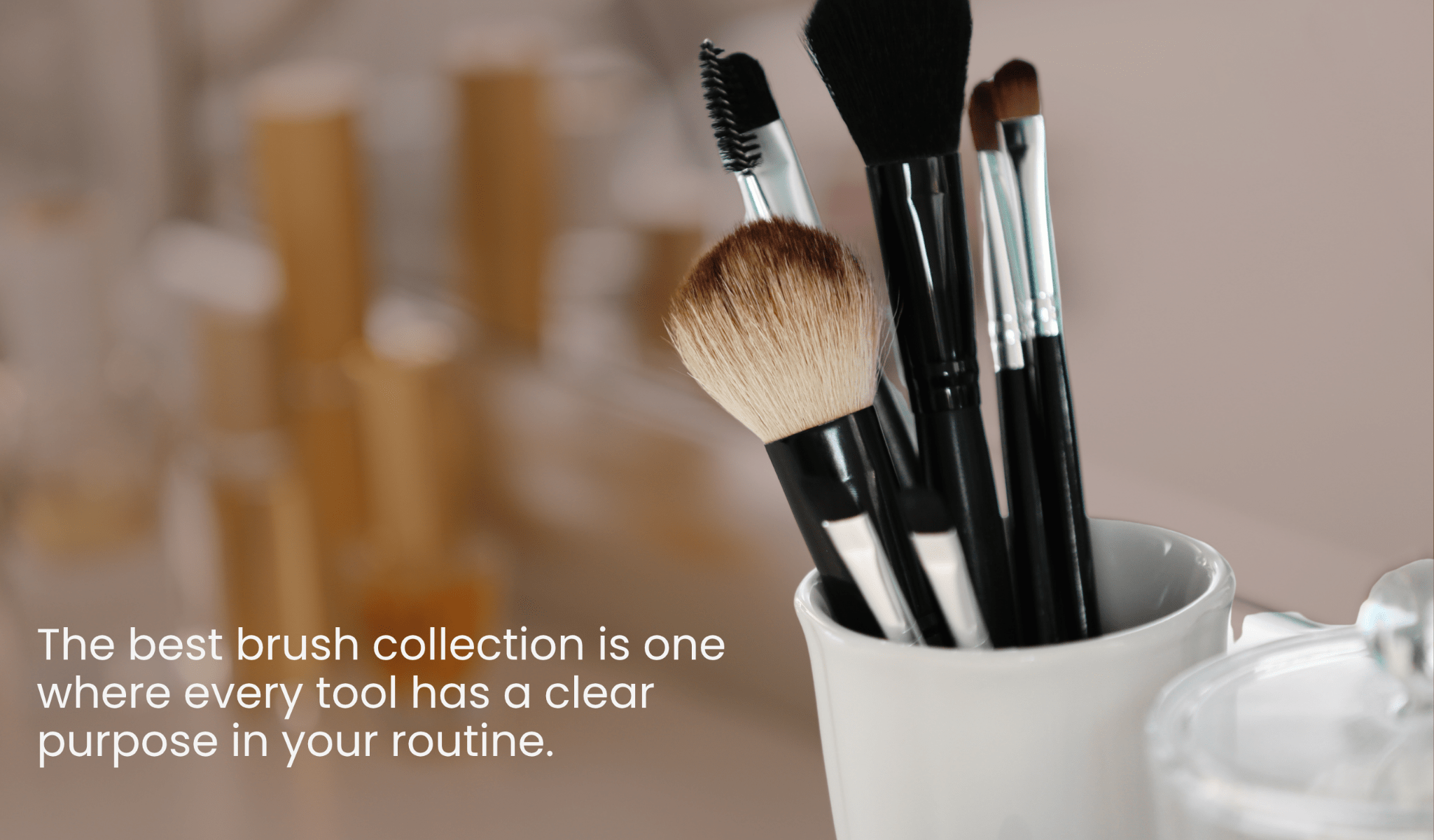
It is easy for makeup brushes to multiply without much thought. One comes with a palette, another promises a more seamless base, and before long there are several brushes in the same drawer doing almost identical jobs.
A more mindful collection is not necessarily a tiny one. It is simply one where every brush has a purpose.
That might mean choosing tools that work across several products, replacing brushes that no longer feel comfortable on the skin, or resisting the urge to buy a full set when only one shape is actually missing from your routine.
The goal is not minimalism for the sake of it. It is to create a brush collection that feels useful, easy to maintain and suited to the way you actually wear makeup.
1. Start with the makeup you genuinely wear
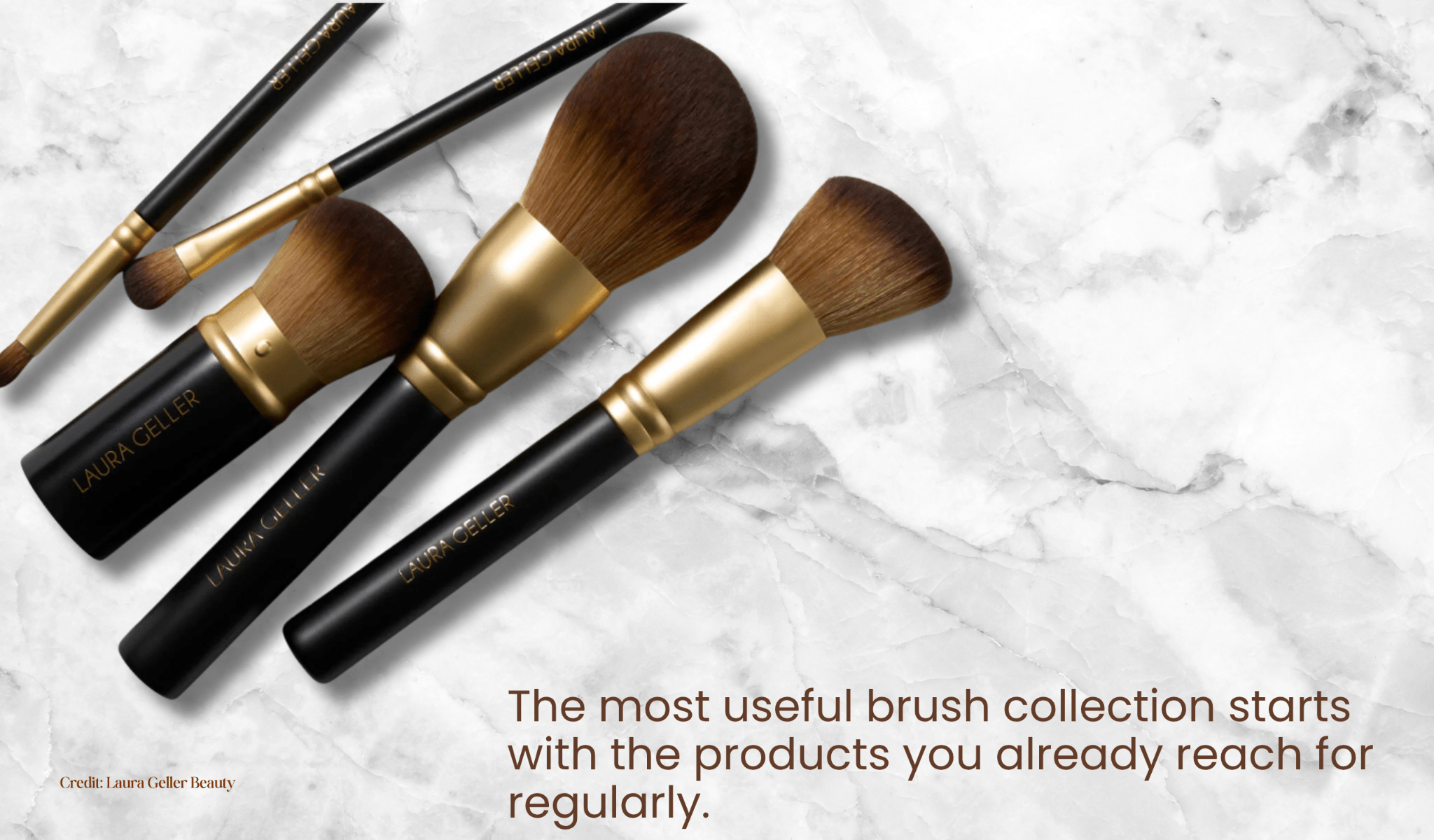
Before buying another brush, look at the makeup you use during a normal week.
If your everyday routine is built around powder foundation, blush, brow colour and one neutral eyeshadow, there is little benefit in owning several brushes designed specifically for liquid foundation or detailed eye looks.
Likewise, if your natural makeup routine is already pared back to a few dependable products, your brushes can follow the same logic.
Start by laying out the tools you use most often. Then separate the brushes that have not been touched in months.
That simple exercise usually makes it clear which shapes are genuinely useful and which ones were bought because they seemed essential at the time.
A good rule: buy for the routine you have, not the routine you imagine you might start one day.
2. Choose brushes that can do more than one job
Some brush shapes earn their place because they can move easily between products.
A softly angled face brush can often work with blush, bronzer or soft contour. A medium eye brush can place colour and blend the edges, while a dense kabuki can be useful for buffing powder products or building coverage in targeted areas.
That versatility matters if you want a smaller, more practical collection. Rather than focusing on how many pieces come in a set, it is more useful to look at whether the shapes fill genuine gaps in your routine.
This is also where brands that design with mature beauty routines in mind can be particularly relevant. Laura Geller has long built its makeup offering around ease of use, soft application and products that do not require overly complicated techniques, and that same thinking carries through to its tools.
A makeup brush set from Laura Geller brings together face, eye and kabuki-style brushes intended for everyday application, with an emphasis on shapes that can work across familiar complexion and colour products rather than feeling overly specialised.
For mature skin in particular, that kind of versatility can make a routine feel less complicated. A brush that blends softly and works with several formulas can be more useful than a highly specific tool that only comes out occasionally.
The best set is not necessarily the largest one. It is the one where most of the brushes make sense for the products you already own.
3. Pay attention to softness and control
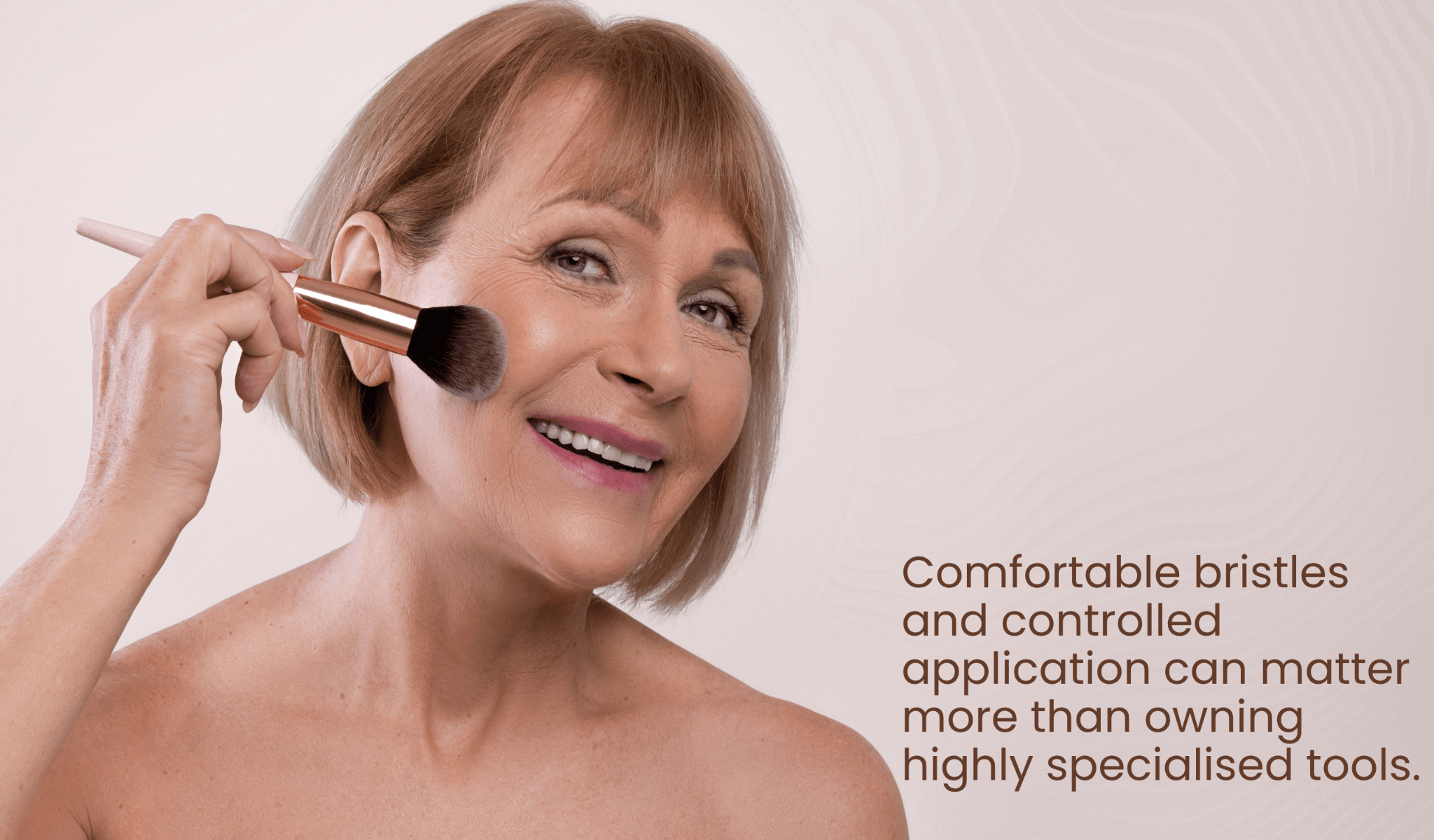
Brush shape matters, but so does how the tool feels against the skin.
Very stiff or scratchy bristles can make makeup application uncomfortable, particularly around the eyes, cheeks and other areas where the skin may feel drier or more delicate.
Softer brushes can also make it easier to build powder gradually rather than depositing too much pigment at once.
This becomes especially useful when working with blush, bronzer or setting powder on skin where texture is more visible. A lighter hand can help maintain dimension rather than creating a flat, heavily powdered finish.
Synthetic bristles are now common in many modern brush ranges and can also appeal to shoppers making more considered choices around vegan beauty.
The deciding factor, though, should still be performance.
A brush should feel comfortable, pick up the right amount of product and give you enough control to place it where you want it.
4. Stop buying duplicates without realising it
Most makeup brush clutter does not come from wildly different tools. It comes from owning several versions of the same one.
You might have three powder brushes with slightly different handles, two almost identical crease brushes and multiple angled brushes that all end up doing the same job.
Before adding another brush, compare it directly with what you already own.
Ask yourself whether the new shape is genuinely different, whether it solves a problem your current brush cannot, and whether you can see yourself using it regularly.
If not, it may simply be another duplicate in disguise.
This does not mean owning more than one similar brush is always unnecessary. If you rotate between cream and powder products, for example, having separate tools can make sense.
The point is to know why each brush is there.
A mindful collection is not about owning fewer brushes. It is about avoiding brushes that add no real value.
5. Keep the brushes you own in better condition
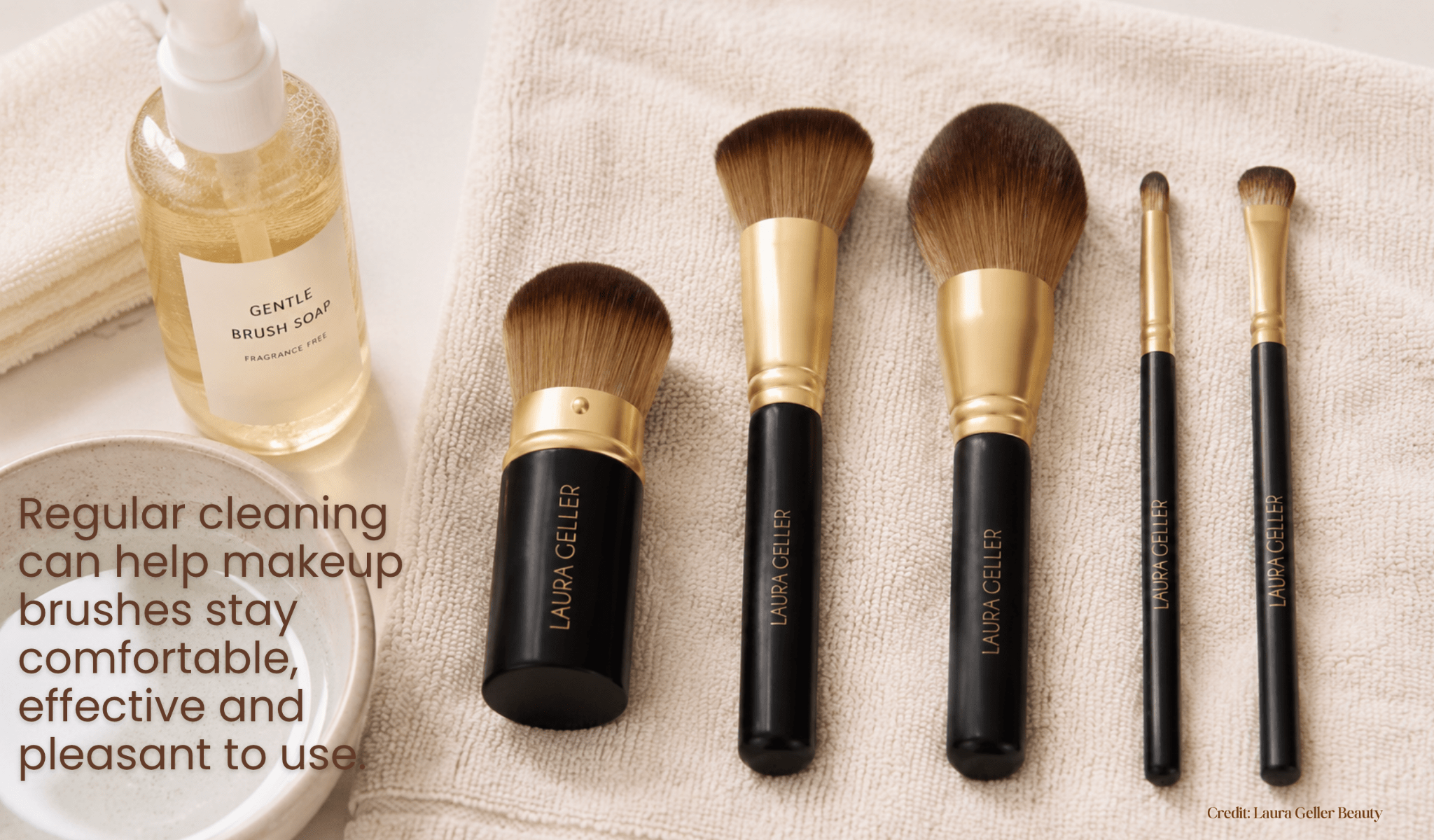
A brush can feel completely different when it is clean.
Foundation residue, powder, oils and pigment gradually collect in the bristles, which can affect how evenly a product applies and how soft the brush feels against the skin.
Simple habits can go a long way toward keeping makeup brushes fresh, especially when the same few tools are used several times a week.
Follow the care instructions for the brush, wash it gently and allow it to dry thoroughly before putting it back into a closed makeup bag.
Cleaning is also a useful moment to assess the condition of your collection.
If a brush is constantly shedding, has lost its original shape or feels rough even after washing, it may genuinely be time to replace it.
On the other hand, a brush that simply looked dull or performed poorly because of product buildup may feel perfectly usable again once cleaned.
6. Let your collection change with your routine
The brushes you relied on five years ago may not suit the makeup you enjoy now.
Perhaps you have moved away from full-coverage foundation and prefer lighter powders. Maybe cream blush has replaced powder blush. Or your eye makeup has become softer and more simplified.
Your tools can evolve with those changes.
This is particularly relevant as skin texture and makeup preferences shift over time. Techniques that once depended on dense application may begin to feel too heavy, while softer blending and more controlled placement can create a finish that feels fresher and more comfortable.
Even small details such as brows can change the overall effect. A softer approach to looking younger naturally often comes down to placement, blending and avoiding overly rigid lines rather than adding more product.
A makeup brush collection should support that evolution rather than lock you into old habits.
If one brush consistently makes your routine easier, take note of why. If another never feels quite right, there is no reason to keep forcing it into rotation.
A mindful brush collection should make makeup easier
The strongest makeup brush collection is rarely the one with the most options.
It is the one where you can reach for a tool without wondering what it is meant to do.
Start with the makeup you actually wear. Prioritise adaptable shapes. Pay attention to how the bristles feel. Avoid unnecessary duplicates and take care of the tools you already own.
Most importantly, allow the collection to change as your routine changes.
A mindful approach does not require strict rules about how many brushes you should own. It simply asks whether each tool is useful, comfortable and worth the space it takes up.
Choose brushes that make your routine feel simpler, not fuller.

Hey welcome to my blog . I am a modern women who love to share any tips on lifestyle, health, travel. Hope you join me in this journey!


Speak Your Mind