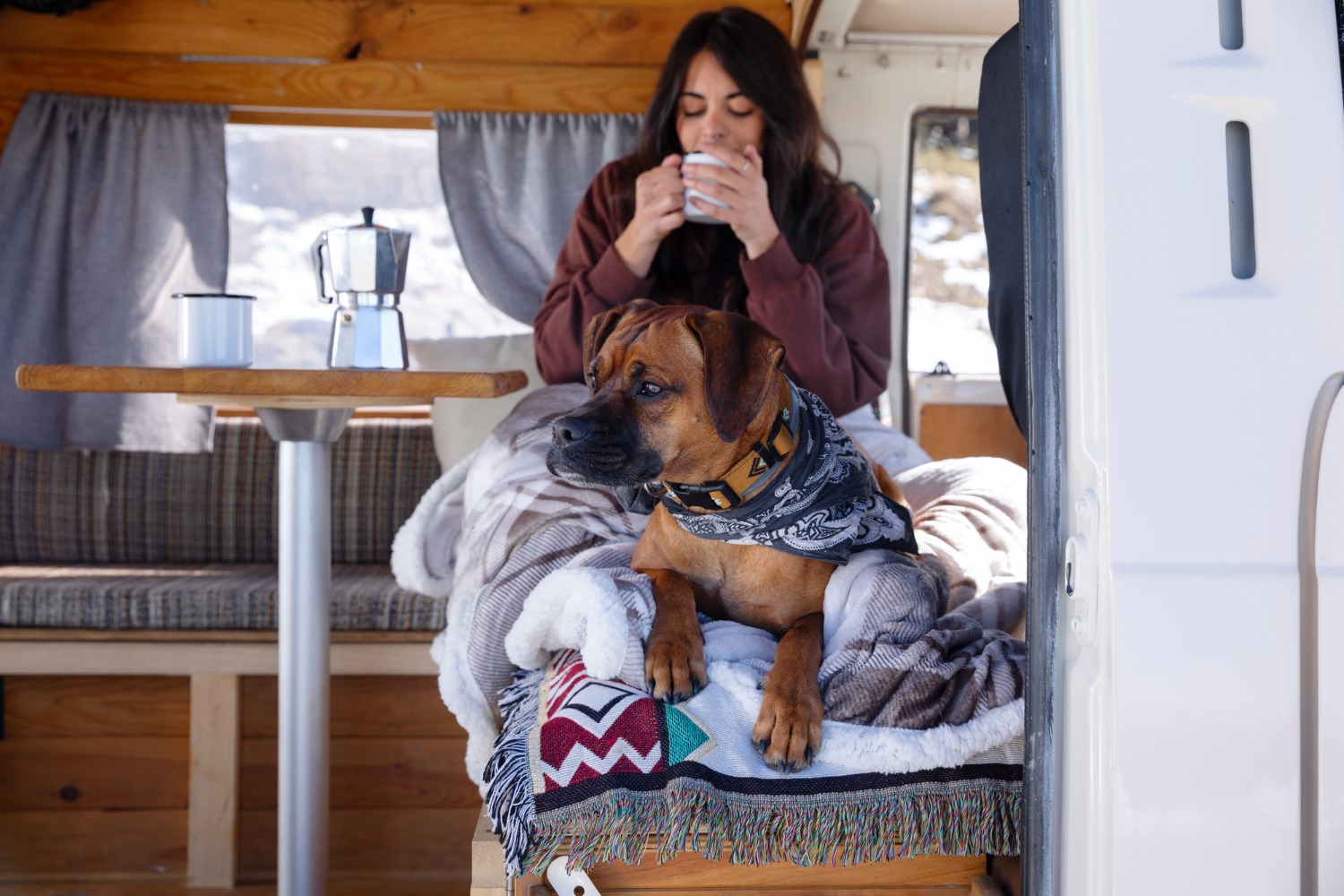
Bringing a dog along for a long road trip or camping adventure is more than just throwing a few of the pooch’s things into the car and remembering to push the power window lock. Dogs have different needs on the road, in weather conditions, and in camp than they do at home. They’re also more likely to get injured in transit, either in a crash or after they’re spooked and bolt in an unfamiliar area. So the dog and its necessities are not a metaphorical passenger in the whole operation; it’s like having a kid, only one you keep in a booger-streaked fur coat.
Pre-Departure Planning: The Work That Happens Weeks Out
The biggest mistake many owners make is treating the trip itself as the dog’s first exposure to the vehicle, the crate, or the new routine. You want to start acclimatizing weeks before departure: short drives, positive reinforcement, time spent in the crate or harness at home, so the first long day on the road isn’t also the first time the dog has ever been in that setup. Dogs that are stressed by novelty compound every other risk on this list – they’re harder to settle, more prone to motion sickness, and more likely to bolt if spooked.
Then there’s basic safety and convenience: you’ll have enough to worry about without a stressed-out dog.
Prepare the administration and health issues early. With the vaccinations, for example, you don’t want to be doing it all the week before you leave. They will stress your dog out and they’ll have to deal with a day or two of feeling flat and maybe a bit feverish too, which is no fun if you’ve got 800 km to cover the next day.
Same goes for applying a tick and flea preventative. You want to use a decent chewable that vets recommend should be active three days post-ingestion to kill ticks, not apply a spot-on the morning you leave. That won’t have much effect, you need to kill these things a few days before they embed in your dog somewhere.
Book dog-friendly campsites in advance and read the fine print carefully. “Pet-friendly” often means a designated zone only, not full run of the park, and most national parks ban dogs outright. Turning up without checking can mean a wasted drive or a dog stuck in the vehicle while you scramble for a plan B, so confirm the actual policy before you commit fuel and time to a destination.
Pack a dedicated kit for the dog, separate from your own gear:
- Food for the full trip plus a buffer, stored somewhere it won’t spoil in heat
- An extra 1-2 litres of water per day above normal intake, plus a collapsible bowl
- A cooling mat and a lightweight shade cloth
- Tick removal tool, antiseptic, and bandaging for basic wound or bite response
- Paw wax or booties for hot bitumen and corrugated tracks
- Vaccination paperwork and microchip records
- A secondary ID tag with your mobile number and the number of someone not travelling with you
The final point is more important than many realize. If the dog runs away and is found by someone, your phone may also be out of range – a second contact not in the car actually gives the person who finds your dog a number that can be reached.
On-Road Protocol: What Actually Happens While You’re Driving
An unsecured dog in a car can not only distract the driver but also pose a danger to both the passengers and the dog in the event of a crash. Therefore, using a crash-tested crate, dog-specific harness, or a rear-cargo barrier is not a matter of choice but a necessity. It is recommended to get the dog used to the restraint system by testing it during some short drives before the trip and then using it every time while traveling. Loose in the cabin, in the driver’s lap, or roaming in the tray are not safe options. Choose one restraint, test it, and use it regularly.
The feeding schedule should be adapted for the road. The recommendation is to skip a meal within 90 minutes of ongoing driving (allows to avoid motion sickness), and when driving all day-long do your best to keep the timing unchanged yet accommodate for time zones changes. A meal or two will be impractical. Generally speaking, the more consistent the feeding schedule the calmer the pup.
Take a fifteen-minute rest to let them walk and drink water properly every two hours. Dogs should drink more water than you if they’re working, and it’s hot, which it will be. Carrying extra water is not simply convenient, it is absolutely necessary to ensure you never run out of water when you’re between towns on an outback drive.
Now let’s talk heat. Real numbers not just a general warning. On a 26.7°C day with your window down two inches, your car can heat to over forty degrees in just an hour. On a searing 43.3°C day, it’s 68 like an oven in less than ten minutes (AVMA). A day of 26.7 isn’t considered a hot day; it’s room temperature. Room temperature can kill within ten minutes. A dash of 68 in the carpark and your dog’s dead before you’ve paid for the fuel. Don’t think leaving the window down is protecting the vehicle from heat. A slight breeze doesn’t cut it. Don’t kid yourself the dog will be okay. If you think it’s inconvenient to take your dog in, it’s better to bypass that stop in a journey or stay in the car with your dog.
Protecting your pet’s paws while you’re taking them for a walk is essential. Always check how hot the ground is before letting your dog walk on the road or dry paths since it’s too easy for paws to burn. The morning or the evening is the best time for walks as roads can be hot during the day. If you have to walk on a gravel road, using paw wax or boots is your best option.
Campsite Setup: Building A Stable Base Camp
Once you get there, you want a cool, shaded, ventilated area where the dog can relax and get used to the new routine rather than being on edge for the whole trip. This is where the vehicle setup itself starts to matter as much as anything you’ve packed. A swag or car-sleeping setup gives a dog almost no separate space, no shade of its own, and nowhere to store the travel kit out of direct sun. A proper camper trailer changes that equation. Trailers designed by Austrack Campers give you an annexe or awning area that creates genuine shade, storage compartments that keep food and meds out of the heat, and a layout that supports a consistent daily routine – the same crate spot, the same feeding corner, the same sleeping area night after night. That does more for a dog’s stress levels over a seven-day trip than almost anything else on this list.
Using a leash around the campsite is more than just a good demonstration of courtesy – it’s increasingly a smart safety move. Other campers, unidentified native animals, and a notable lack of fences pretty much everywhere signal that on-leash containment is fairly obligatory, not an optional, ‘oh but Toto will be fine…’ kind of thing, even on sites that promise to be dog-friendly. Here’s where a reliably strong and comfortable leash and harness first become absolute essentials.
The other imperative is that you don’t know a place is safe and enclosed until you’ve parked the car, set up your pitch and done a full recce. Your best-behaved dog could easily be prowling through baits before you arrive. So save the leash-free sessions for formally encamped sessions where both your dog and you know that they are – all that fun space and no cars incoming or lurking in the wings to put a damper on Fido’s adventures in the new locale.
Ticks and Snakes: The Two Bogeymen You Can’t Avoid
Paralysis ticks are number one. Climate change has made bad tick seasons worse and good ones as bad as the old bad ones. If you haven’t brought your treatment game with these nightmare fuel parasites up to speed, don’t go any farther. It’s the monthly preventative that’s the baseline, the daily full-body check after every bushwalk is the tough bit. Ears, eyelids, gum lines, between the toes – that’s where the little buggers head first. And the sooner you detect and remove the wretches the less hassle and cost you have.
Snake bite risk goes up with remote camping, and it’s a real enough possibility that your first aid kit needs to account for it specifically. Bandaging for pressure immobilisation, a clear plan for which direction to drive if bitten, and a general understanding of how to keep the dog still and calm are worth working out before you’re standing in the dark holding a torch, not during.
Prepare For Emergencies In Advance Of Signal Loss
Before you go out of mobile range map after-hours vets for your entire journey and save addresses and numbers offline. A weekend emergency at 3:00pm on a Saturday in a one-vet-closed town is not the time to be depending on a no-signal search engine. A single prep not a burden – a written list, not a bookmarked page.
Keeping The Whole System Running
None of this functions as a one-off checklist you tick and forget. Daily routines – regular feeding, walking, and settled crate time – are what keep a dog calm and predictable across a trip that might run for weeks. GPS trackers are worth considering for dogs that get curious off-leash, since bolting into unfamiliar bush is one of the more common ways trips go sideways, and a tracker turns a frantic search into a five-minute retrieval.
Travelling long distances with a dog, whether it’s a weekend loop or genuinely travelling the world with a van and a trailer in tow, comes down to the same principle: plan for the dog’s needs with the same seriousness you plan for your own. Get the restraint right, respect the heat, sort the admin before you lose signal, and build a base camp that gives the dog somewhere stable to land each night. Everything else is details layered on top of that foundation.

Hey welcome to my blog . I am a modern women who love to share any tips on lifestyle, health, travel. Hope you join me in this journey!


Speak Your Mind