Ask any parent what a toddler says most often and the answer is usually some version of “help me”. Help me reach this, help me get out of bed. Sometimes that’s simply age. Sometimes the room is behind it, because nearly everything in there was placed at adult height and the child has no way to manage alone.
A Montessori room starts from the other end. The child’s reach decides where things go, so toys and clothes sit within easy range, and even the bed stays low enough to leave without a lift. Below is how that looks in practice, sleeping corner and small rooms included, and which mistakes tend to spoil the whole idea.
Basic Principles of a Montessori Kids’ Room
Kids get a lot more done on their own when the room lets them. Shelves at knee height mean a toddler picks her own book, and a little chair fits her legs for drawing. Some children stop asking for help within days, simply because nothing is out of range anymore.
Fewer toys on display also works better than parents expect. Five on the shelf get played with. A full box usually gets tipped over and left. The rest can wait in a closet and rotate back every two weeks.
Each toy gets a spot. The blocks have a basket, and the puzzles have a shelf; that’s about it. Show a child once or twice, and she starts putting things back on her own – not every time, but often enough that you notice.
How to Organize the Sleeping Area
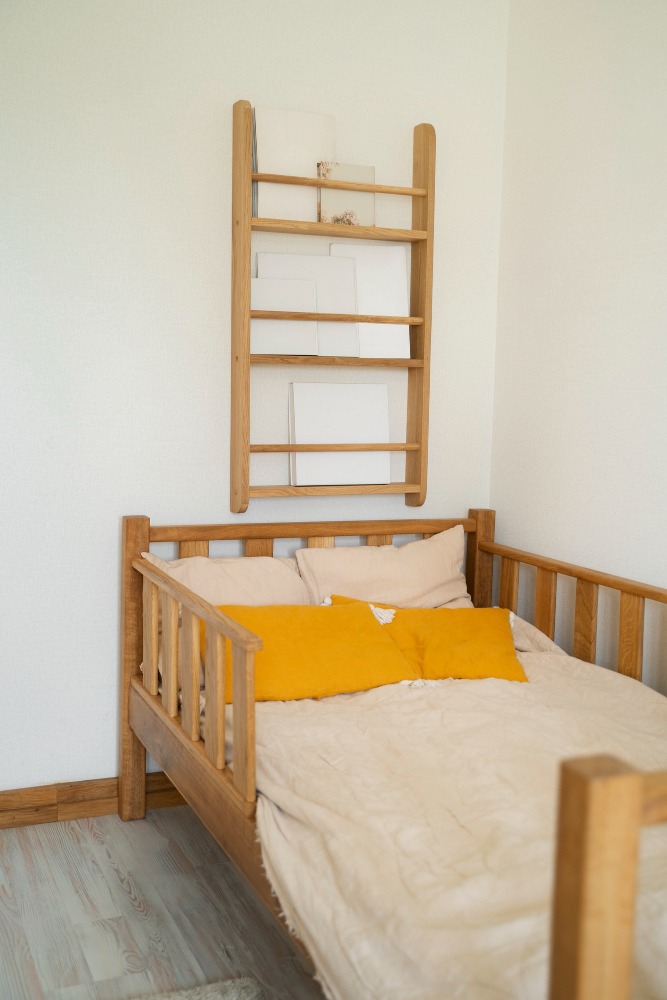
Put the mattress low, and a lot of morning problems simply disappear. Kids wake up and slide off the mattress to go find their toys. Nobody has to come running. Even if a child rolls out of bed during the night, the low height means there’s less distance to fall.
A Montessori bed works exactly like that. BusyWood makes theirs by hand from natural wood, with a low frame and slats under the mattress so air can get through. Rails are an option for kids who wriggle a lot in their sleep, and the open version suits kids who don’t. At floor level she can even carry a book to bed herself.
Keep the corner around it plain. A rug and a night light are plenty.
Furniture That Helps a Child Be Independent
Shelves come first. If the books sit at knee height, a four-year-old takes one herself, and returning it afterwards is her business too. Doors and drawers that hide things work against this, because what she can’t see she forgets to ask for.
Then there’s the question of size. Plenty of toddlers drag a stool to the kitchen table just to color. Give one her own little table and a chair her feet can reach the floor from, and the stool disappears from her day. Drawing starts whenever she feels like it, without a single “help me up”.
Storage should be boring. Seriously. One low drawer where her T-shirts live and a hook for the jacket at her height, and that’s the whole system. Give it a week and she knows where everything goes, and she’s dressed before you’ve even found your keys.
How to Combine Sleeping, Play and Study Zones
Okay, the room is small. Everyone’s is. So start with the bed and put it as far from the door as it will go, because a creaking hallway floor at 6 a.m. is what wakes most light sleepers. Play gets the rest of the floor. Lay down a rug and tell the kid that cars live on it, simple as that. Blocks that wander off the rug get collected. Nobody has to argue about it.
Drawing goes by the window, because daylight is easier on little eyes than any lamp. Keep paper on a low shelf nearby, or you’ll be the one fetching it all day. In the evening, turn the ceiling light off and leave one warm lamp by the bed. Kids wind down faster than you’d expect. Furniture against the walls, middle of the room empty, since that’s where the playing happens.
Common Mistakes in Setting Up a Kid’s Room
Mistake number one: too much furniture. Everyone does it. You add a bookcase, then a chest, then something “just for now”, and a three-year-old ends up sidling along the wall to reach her own bed. Kids need an open floor. Haul out whatever she never touches, and the room suddenly breathes.
Then there’s placement. Toys on a shelf above her head look neat in photos, but she can’t reach them, so you become the delivery service. Same story with a wardrobe rail at adult height. Move the things she uses every day down to her level and half the “mom, give me” moments vanish.
The last one is quieter. Parents lock away stuff that is perfectly safe, because it’s easier than watching. A kid who can’t open her own drawer stops trying. Let her reach what’s safe, and keep the rest out of sight.
A kid’s room works when she can use it without you. Shelves at her height, a bed she gets out of alone, a rug where the toys live. Fewer things, more floor.
Check the room from her angle once. Crouch down, look around, try reaching for her cup. Whatever you can’t reach from there needs to move. Do that, and half the daily “mom, help” goes away on its own. The rest is just patience, and a bit of cleaning up after the blocks.

Hey welcome to my blog . I am a modern women who love to share any tips on lifestyle, health, travel. Hope you join me in this journey!


Speak Your Mind