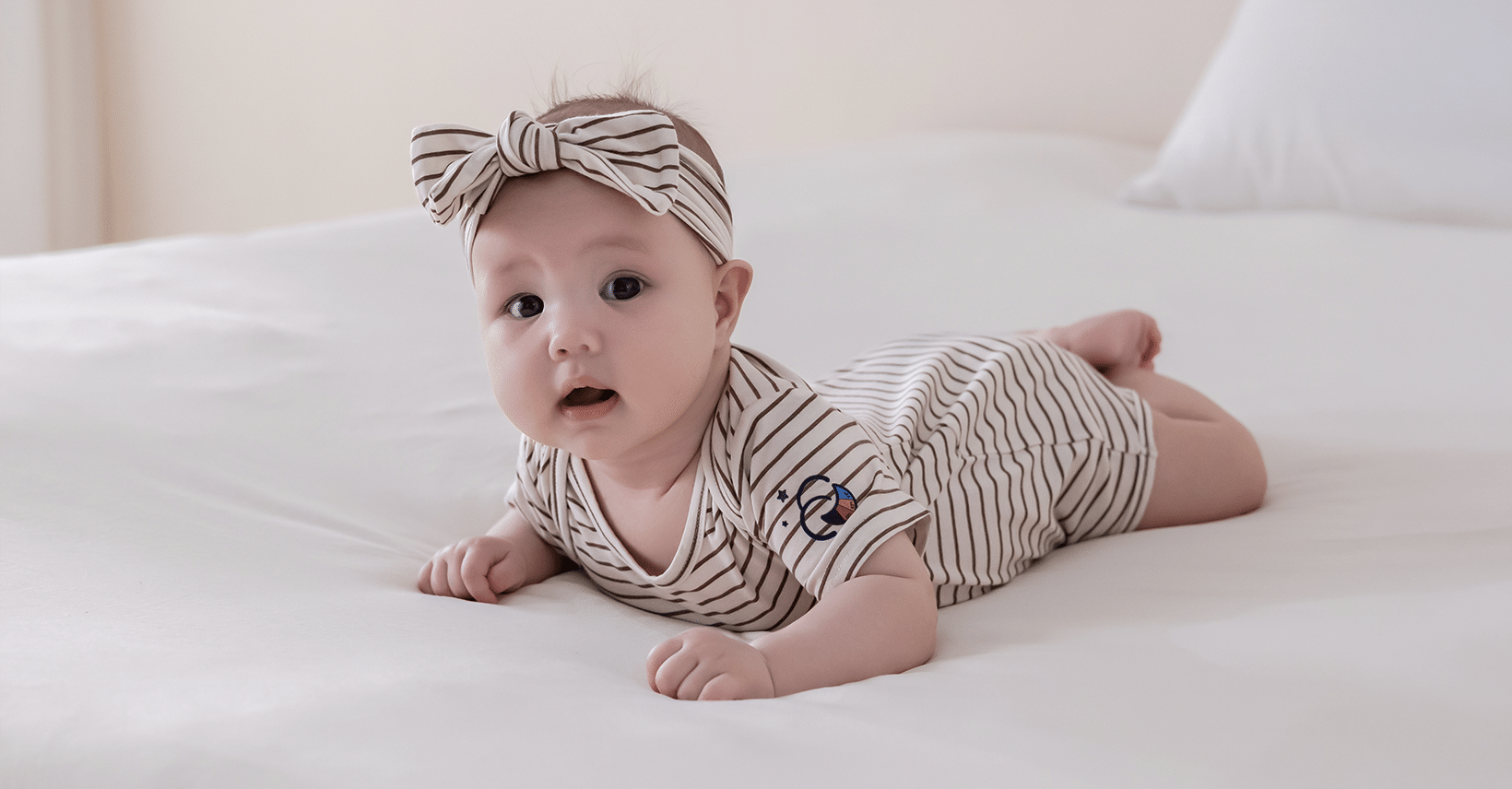
If you have spent any time researching baby pajamas or sleep sacks, you have probably come across the phrase “merino wool and bamboo blend.” It shows up on a lot of products, and it is easy to assume it is just marketing language.
But the reason these two materials get paired together so often comes down to how they handle two specific problems that plain cotton or synthetic fabrics do not solve well: temperature swings and moisture.
What merino wool does
Merino wool is a natural fiber with an unusual property: it responds to changes in body temperature rather than holding a fixed level of warmth. When a room cools down, it traps air to retain heat. When a baby’s body temperature rises, it releases that heat instead of holding it.
This makes it different from synthetic insulation, which tends to hold warmth regardless of what the body actually needs.
It is also naturally breathable, which matters for sleep. Babies who are dressed in fabrics that trap heat often wake up sweaty and unsettled, particularly in the early morning hours when room temperatures can drop but a baby’s sleep cycle is becoming lighter.
One common hesitation with wool is irritation, but merino is notably finer than standard wool, which is why it is used directly against skin rather than as an outer layer.
Most babies tolerate it well, though for any child with known wool sensitivity, testing a small area first is worth doing.
What bamboo rayon does
Rayon made from bamboo is known primarily for its moisture-wicking properties. It pulls water vapor away from the skin before it can build up into the damp, clammy feeling that disrupts sleep. For babies who run warm or sweat during deeper sleep cycles, this is the characteristic that matters most.
It is also soft and naturally hypoallergenic, which makes it gentle for sensitive skin. And unlike some natural fibers, rayon made from bamboo tends to hold up well through repeated washing, which matters a great deal when you are washing baby clothes multiple times a week.
Why the blend works
Neither material is perfect on its own. Merino wool without a moisture component can feel damp in warmer conditions. Rayon from bamboo without the temperature-regulating properties of wool may not provide enough stability through the cooler parts of the night.
Together, they address different parts of the same problem: keeping a baby’s sleep environment stable when the room temperature and the baby’s own body temperature are both shifting.
Kaiya Baby’s ClimaCuddle® Essential series, which includes pajama sets, a romper, and a bodysuit, uses a blend of 73% bamboo rayon, 20% merino wool, and 7% spandex.
The fabric blend gives the fabric four-way stretch, which means it moves with the baby rather than pulling or bunching during sleep, and it holds its shape after washing so the fit stays consistent over time.
Where it fits in a sleep setup
These kinds of pieces work either as standalone sleepwear or as a base layer under a sleep sack, which is where the temperature-regulating properties become especially useful.
A baby dressed in a stable base layer that is managing both moisture and warmth is better positioned to sleep through temperature shifts than one wearing cotton pajamas that may feel damp by 2 am.
The practical result is simpler than the science: fewer wake-ups caused by the baby feeling too hot, too cold, or uncomfortable against their skin.

Hey welcome to my blog . I am a modern women who love to share any tips on lifestyle, health, travel. Hope you join me in this journey!

Speak Your Mind