On almost any weekday, a drive across town will pass at least one of them. A utility crew is working on a power line, a pole is going into the ground, or a pallet of roofing material is swinging onto a rooftop. To most people, they all look like the same machine, a truck with a boom on the back. In practice, they’re built for very different jobs, and choosing the wrong one can stall a project or create a serious safety problem.
The differences come down to two things: what the boom is designed to lift, and how high and far it needs to go. Once those are clear, the whole family of machines starts to make sense.
What Separates One Boom Truck From Another?
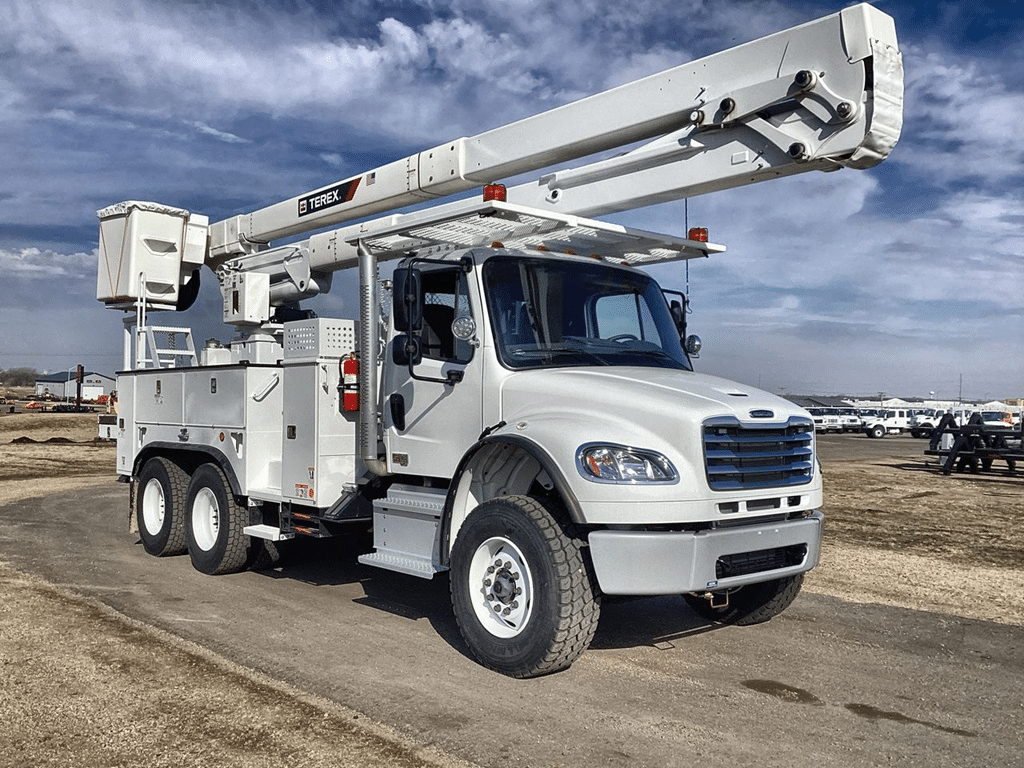
Image Source: terex.com
Every machine in this group starts with the same basic idea: a powered arm mounted on a road-going chassis. The big split is between booms that carry people and booms that carry loads.
Personnel machines, such as bucket trucks and truck-mounted aerial platforms, are designed to lift workers in a basket. In North America, they fall under the ANSI A92.2 standard for vehicle-mounted aerial devices, which covers design, testing, and operator training.
Material handling machines, such as digger derricks, knuckle boom trucks, and boom truck cranes, are built to lift and place heavy objects. These generally fall under OSHA’s construction crane rules (29 CFR 1926 Subpart CC), with certain exemptions for digger derricks doing pole and auger work for utilities.
Keeping that distinction in mind avoids the most common mistake in this space: using a load-lifting machine to raise people, or the other way around.
Exploring the Best Offroad SUVs for Adventure Seekers
Digger Derricks: Built for Poles and Holes
A digger derrick combines a telescopic boom with a large auger and a winch. The auger drills the hole, and the boom lifts and sets the pole into it. That makes these trucks a staple for electric and telecom utilities, as well as fencing, sign, and lighting contractors who need to set large posts.
Most digger derricks carry pole guides or claws at the boom tip to steady the pole as it’s placed. Some can handle anchors and screw piles too. What they’re not designed for is lifting workers, so a separate bucket truck usually works alongside one on line crews.
Knuckle Boom and Crane Trucks: Lifting Materials
Knuckle boom trucks have a folding arm that tucks neatly behind the cab when stowed. On site, the arm unfolds to reach over walls, fences and parked vehicles, which makes it a favorite for delivering drywall, roofing, block and steel right to the spot where crews need it.
Boom truck cranes use a straight telescopic boom and look more like a small mobile crane on a commercial chassis. They’re common for setting HVAC units, lifting trusses, and handling steel on smaller construction projects. Both types are crane equipment under OSHA rules, so operators typically need certification and lifts need proper planning.
Versatile Vehicles Are Hot Right Now, and Mazda is at the Top
Bucket Trucks: The Everyday Workhorse
Bucket trucks are what most people picture first. A boom carries one or two workers in a basket, usually to heights somewhere between 30 and 60 feet. They’re used for line work, tree trimming, street lighting, signal maintenance, and cable installation.
There are several variations worth knowing. Telescopic models extend in a straight line for height. Articulating and over-center models bend at a joint, letting the bucket reach up and over obstacles such as vehicles or fences. A good breakdown of these styles shows why picking the right truck with a boom for line or tree work depends on both reach and the obstacles around the work zone.
Insulation is the other key difference. Insulated bucket trucks are built and tested to dielectric requirements under ANSI A92.2 for work near energized lines, while non-insulated units are meant for general work where electrical hazards are controlled by clearance distances.
Truck Mounted Aerial Platforms: Where Height Gets Serious
At the top of the range sit truck-mounted aerial platforms. They follow the same principle as a bucket truck, but on a much larger scale. Heavy chassis, wide outrigger spreads and long telescopic booms with jibs take crews to heights that bucket trucks can’t approach. The largest units working in North America reach well past 300 feet.
These platforms handle work such as high-rise window replacement, facade inspection, bridge maintenance, stadium lighting, and tall signage. Because they drive to site and set up on outriggers, they’re often faster to deploy than scaffolding or a crane with a man basket, especially for jobs that move between several locations.
Side-by-Side Comparison
| Machine | Main purpose | Typical reach | Lifts people? | Common users |
| Bucket truck | Personnel access | About 30 to 60 ft | Yes | Utilities, tree care, lighting, telecom |
| Digger derrick | Drilling holes, setting poles | Varies by model | No | Utilities, fencing, sign installers |
| Knuckle boom truck | Delivering and placing materials | Moderate, with reach over obstacles | No | Building supply, roofing, masonry |
| Boom truck crane | Lifting heavy loads | Moderate to high | No (crane rules apply) | HVAC, steel, small construction |
| Truck-mounted aerial platform | Personnel access at extreme height | Well past 100 ft, largest beyond 300 ft | Yes | Facades, bridges, stadiums, high rise work |
A quick look at the table shows the pattern. Material machines focus on capacity and placement, while personnel machines focus on reach and worker safety.
Matching the Machine to the Task
A few common scenarios show how the choice plays out.
- Replacing a streetlight fixture: A standard bucket truck is usually all that’s needed.
- Installing new utility poles: A digger derrick drills and sets the poles, with a bucket truck following for line work.
- Delivering shingles to a roof: A knuckle boom truck places pallets directly on the roof deck.
- Setting a rooftop HVAC unit: A boom truck crane or larger crane handles the lift, depending on weight and reach.
- Inspecting a 25-story facade: A truck-mounted aerial platform puts the crew right where the work is, without scaffolding.
When a job sits between categories, the safest approach is to start from the heaviest requirement, whether that’s the load or the height, and choose the machine designed for it.
Frequently Asked Questions
What’s the difference between a bucket truck and a boom truck?
A bucket truck lifts workers in a basket. A boom truck usually refers to a crane-style machine that lifts materials. The two fall under different safety rules.
Can a digger derrick lift workers?
Digger derricks are designed for drilling and setting poles, not for lifting people. Crews use a bucket truck or aerial platform for personnel access.
How high can the tallest truck-mounted platforms reach?
The largest units working in North America reach beyond 300 feet, which puts many high-rise buildings and large structures within reach of a crew in a basket.
Wrapping Up
Every truck with a boom has a specific job, and the easiest way to keep them straight is to remember the purpose behind each one. Digger derricks set poles, knuckle booms and crane trucks move materials, bucket trucks lift crews to moderate heights, and truck-mounted aerial platforms handle the tallest personnel work. For projects that need serious height, the team at https://www.bladeplatforms.com/ can help review reach, ground conditions, and site access, then point crews toward a setup that fits the job.

Hey welcome to my blog . I am a modern women who love to share any tips on lifestyle, health, travel. Hope you join me in this journey!


Speak Your Mind