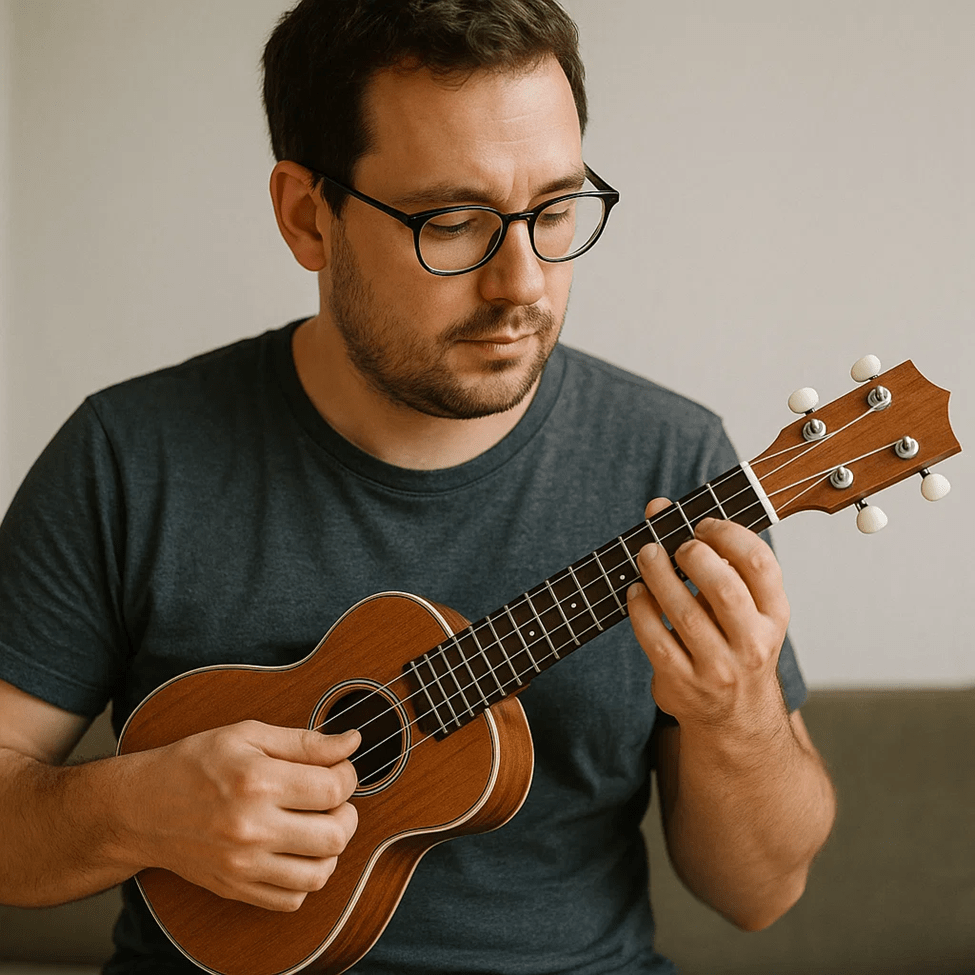
You can pick up the guitar at 8 or at 80. I’ve had students in both age groups, and the joy on their faces when they play their first song is the same. Don’t think age is a limit, it isn’t. In fact, I’ve often found adults learn with more focus. You know the kind of music you love, and you’re usually ready to put in the effort to get there.
I’ve taught people who dreamed for years about playing the guitar or ukulele, and when they finally started, the hardest part was simply keeping the courage to go on after the first rough weeks. Strings can hurt your fingers, chords can buzz, and rhythm takes patience. But if you stick with it, that first clean chord or that first simple melody feels worth every minute of practice.
H2: What instrument to choose for self-learning
Over the years, I’ve seen plenty of students try to teach themselves. Some managed fine, especially with today’s resources, but I’ll be honest with you, having a few lessons at the start makes the road much smoother. At EverestMusic, we’re not just a music shop, we also run a busy School of Music in Bray and Rathnew. So while we’re all for self-learning, we’ll also tell you straight. A teacher can catch those early mistakes before they turn into bad habits, and sometimes all you need is someone to say, “You’re on the right track, keep going.”
That said, guitars and ukuleles really do lend themselves well to self-learners. They’re forgiving instruments compared to something like the violin, where every tiny movement affects the sound. With a guitar, you can learn your first major or minor chord in a single lesson. You’ll pick up a few strumming patterns, figure out how to move your fingers along the frets, and before long, you’ll be able to play a song that people recognize.
H2: Use Good Resources (and be careful with Google holes)
When you begin learning guitar, the huge amount of online material can feel overwhelming. YouTube can keep you busy for years. But many students get lost in rabbit holes. They jump from one flashy tutorial to another. This often stops them from building a solid foundation. I advise you to use these resources, but stay focused. It’s better to choose one or two that really suit your learning style and stick with them long enough to see progress.
Books are still underrated. A good book gives you structure without distraction. Online courses can also be useful, but make sure they’re complete programs, not just scattered lessons.
Apps are a real gift for today’s learners. In my day, we tuned guitars by ear (often badly), but now you can download GuitarTuna and have a perfectly tuned instrument in seconds. I’ve had young students who learned all their chords using SmartChord, while others loved Yousician because it felt like playing a game instead of doing drills.
Here are some I’ve seen work well for beginners and improvers alike:
Apps to Learn to Play Guitar
GuitarTuna – quick and accurate tuning for acoustic, electric, and even bass guitars.
Yousician – play along with songs, track your progress, and get feedback in real time.
TrueFire – great for players with some basics already who want deeper lessons.
Justin Guitar – feels like having a friendly teacher guiding you step by step.
Coach Guitar – structured lessons from beginner to advanced.
Perfect Ear – rhythm and ear-training exercises that will strengthen your musicianship.
SmartChord – a one-stop app for chords, riffs, and scales at all levels.
AI Tools for Learning and Creating Music
Now, let’s talk about the new AI-powered tools. Over the years, I’ve seen many tools come and go, but this new wave of AI-powered apps really can support your practice if you use them wisely. I don’t see them as replacements for lessons, no app can watch your hands or feel your rhythm the way a teacher can, but they’re excellent companions between classes.
If you’re just starting, tools like Chordify and Yousician can make practice less intimidating and more fun, while Skoove is a solid choice for piano students who want clear guidance at home. For students curious about theory, I like Hookpad—it helps you actually hear why one chord works after another. And creative minds often enjoy AIVA, which generates new musical ideas when you feel stuck.
I especially like MakeMusic, because it gives instant feedback during practice, something I wish I had as a student myself. And for the more adventurous, Endlesss and SOUNDRAW open up ways to jam, arrange, and experiment, even when you’re playing alone. And for accessibility, apps like EyeHarp are nothing short of inspiring, they show that music really is for everyone.
But again, don’t underestimate the value of a few proper lessons to keep you on track. At Everest School of Music, we offer private lessons for kids and adults, and even do group sessions if you want a more social vibe.
Some Tips to Make Learning Easier
You need to tune your instrument every time you play. I can’t tell you how many students came to their first lessons convinced they had “no ear,” only for me to discover their guitar was half a step flat. The wrong tuning will frustrate you before you even start.
Learn your basic chords and scales early. You don’t have to dive deep into sheet music if that’s not your thing, but knowing a handful of open chords, a scale or two, and how they fit together is like learning the alphabet. Without it, you’re just guessing words.
Don’t just practice, listen. I’ve had students who plateaued simply because the only thing they ever heard was themselves practicing. When they started listening to jazz, hip-hop, or even folk music outside their comfort zone, their rhythm and ear improved almost overnight.
Be careful with gear. Everyone loves shiny pedals, but I’ve seen them cover up sloppy technique more times than I can count. Build your foundation with a clean sound. Once your chords ring out clearly, effects become a tool, not a crutch.
Make rhythm your closest companion. I sometimes tell beginners to tap their foot or sing nonsense syllables like “da-ba-dee” while they strum. It might feel silly, but your body learns faster when it locks into the beat.
And of course, practice. There is no way around it. I sometimes laugh when students ask me for “the trick.” The trick is to play again, and again, and again. But here’s a little secret: record yourself. When you listen back, you’ll hear things your fingers never noticed in the moment. That’s how you really learn.
Final Thoughts
As adults, we don’t have the endless afternoons that kids do. We need structure. I often compare practice to the gym: ten minutes every day will do more for you than two hours once a week. Short, regular sessions keep your muscles and your mind engaged.
I’ve been teaching for over thirty years, and if there’s one thing I’ve learned it’s this: you’re never too old, too busy, or too late to begin. All you need is a tuned instrument, a bit of patience, and the willingness to enjoy the journey.

Hey welcome to my blog . I am a modern women who love to share any tips on lifestyle, health, travel. Hope you join me in this journey!


Speak Your Mind