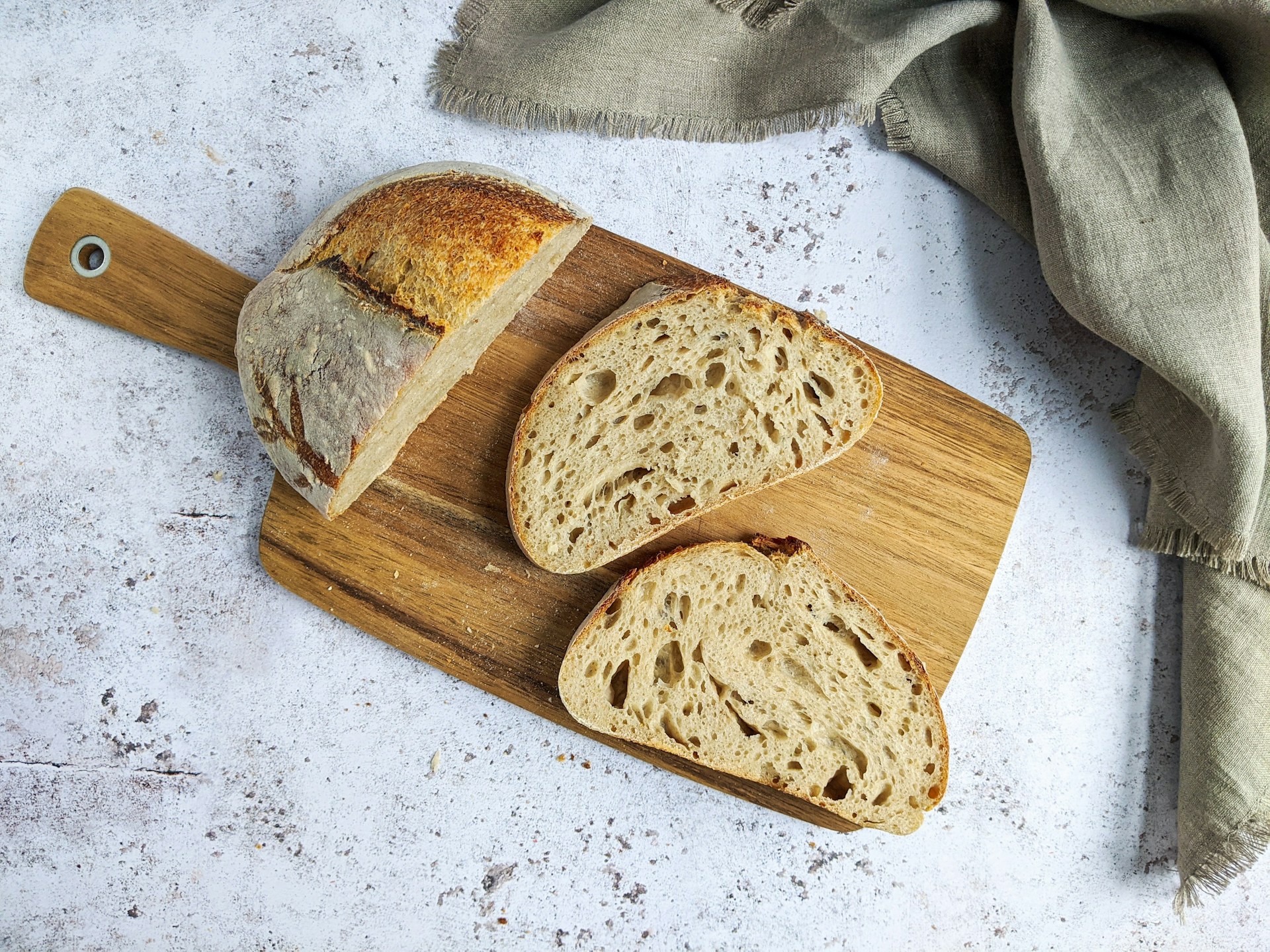
Producing a food staple such as flour and water that have been made to rise into a bubbly form used for baking the best sourdough breads is absolutely magic at its finest! Magic that is available right here at home that is without a doubt unrivaled!
Praise god that it is not too hard to make your own gluten free sourdough starter, it only needs patience and a few simple materials. Making your own gluten free sourdough starter is simply just making a mixture of flour and water that have been fermented by yeast and bacteria into a bubbly dough used for making a numerous variety of foods such as the gluten free sourdough breads we all love, pancakes, and pizza. Now in order to do this, we must first know how to take care of our sourdough starter.
What Is a Gluten Free Sourdough Starter?
A sourdough starter refers to a mixture of flour and water that has been aerated to create a frothy consistency. The wild yeast and bacteria feed on some of the sugars in the flour, producing gas. The gas produced is the main reason behind the leavening and tangy flavor associated with sourdough bread.
A gluten free sourdough starter is made up of a mixture of gluten free flours. The sourdough starter has a more runny dough than the regular sourdough. This is because of the ratio of water to flour that is used. When making sourdough bread, individuals with celiac disease or those who are gluten intolerant should avoid mixing sourdough with wheat, barley or rye flour. Therefore, when preparing a sourdough starter, one should be careful when handling gluten.
Ingredients You’ll Need
A Gluten Free Sourdough Starter Recipe is simple to make and only requires a few ingredients. The following is a list of ingredients needed:
- 120g Gluten free flour
- 120-130g Filtered or dechlorinated water
- Glass container
- Kitchen scale
- Spoon
In order to make a sourdough starter, you will need to use either brown rice flour or gluten free all-purpose flour. You could try using a gluten free bread flour blend, but keep in mind, every gluten free flour brand has a different absorption rate than wheat based flours.
A kitchen scale is preferable when it comes to baking, as opposed to using measuring cups. Of course, you could use measuring cups, but if you have a kitchen scale on hand, you will find that the ratios are much simpler when using one.
How to Make Gluten Free Sourdough Starter
Day 1: Mixing the Dough
In a jar, combine 60 g of gluten-free flour and 60 g of water and stir until there are no more lumps.
At this point, the dough should have a very liquid, almost pancake-like consistency. Check if the dough is ready, and if it is too thick, add some more water. In addition, during the 24-hour proofing period, the dough needs to be kept in a warm place and left to rest, but the jar has to be opened to let the gas escape.
Day 2: First Check
Although you may not see much change on day 2, it is important to give your dough a good stir.
At this point, remove about half of the dough from the jar and add 60g of gluten free flour and 60g of water to the remaining dough. Stir until the mixture is well combined. At this point, it is important to allow the mixture to sit for another 24 hours.
At this point, you may notice a few bubbles forming, along with a slight sour smell, but it is not ready yet.
Days 3 – 5: Feeding the starter
It is essential to feed the starter the same way for the next few days. Remove the previous portion of the starter and feed the remaining 1/2 with 60g of gluten free flour and 60g of water. Moreover, it is crucial to stir and leave the starter in room temperature until the next feeding. After several days, your gluten free sourdough starter should start to become more prominent as it will begin to smell more sour and develop bubbles. In case, if it does not seem to be doing any changes, do not worry because most starters need more time to awaken.
Days 6 – 10: Checking readiness.
It may be challenging to know when your sourdough is ready to use, so there is no exact answer for now. For a week or so, it should start to become more significant. According to King Arthur baking, some sourdough starters may need up to two weeks or even a month
How Can I Tell If My Starter Is Ready?
An active, healthy souredough starter will have lots of bubbles and smell nice and sour. In addition, it will have a fantastic rise after feeding.
Moreover, it is essential to remember that a nice, healthy-looking starter may sometimes be deceitful. So, you should test a bit of a starter to see if it is ready for baking. Ideally, after you feed it, observe how it looks, and if it is healthy, it should begin to rise to double its size.
For the Best Results, What Kind of Gluten Free Flour Should I Use?
There is no right or wrong answer here. However, most home sourdough bakers would suggest using brown rice flour as it is the most common one. Another popular choice for people who want to make gluten free sourdough is ‘Sorghum’, it has a rich flavor, but there are many other options as well. If you plan on using a gluten free sourdough starter, make sure to use a gluten free flour blend if you wish to avoid gluten. It is essential to remember that most gluten free flours need more water than regular wheat flours.
Common Gluten Free Sourdough Starter Problems
My Starter Isn’t Bubbling
Don’t worry, bubbles will come in time. In the meantime, try to keep your starter in a warm place
My Starter Doesn’t Smell Pleasant
A gluten free sourdough starter will smell slightly sour or even extremely sour. If you notice mold on your starter, it is important to start over.
My Starter Rose Then Stopped
This is completely normal for young starters. You probably fed it enough, so it is time to just let it rest.
My Starter Is Too Thick
Different kinds of gluten free flours require differing amounts of water, so try adding a few drops to loosen it up.
My Starter Is Too Runny
Try adding some flour to the mix.
Tips for a Successful Gluten Free Sourdough Starter Recipe
Make sure to always use a clean jar to make it easy to see the bubbles in your starter.
Mark the level of liquid in your starter with a rubber band after each feeding.
Make sure to keep your starter in a warm place.
Remember that sourdough starters mature at different rates, so you should give yours plenty of time to mature.
Do not use measuring cups when measuring water and flour. Use a kitchen scale instead.
If your starter matures slower than expected, don’t worry. A well-fed sourdough starter won’t necessarily start maturing after exactly 8 or 10 days.
Can I use Gluten Free Sourdough Discard For Baking?
Yes! Anytime you take some of the sourdough starter out to feed the remaining sourdough, you can use what you took out in other recipes. You can use gluten free sourdough discard for making pancakes, waffles, sourdough crackers and just about any kind of muffin or bread you can imagine. The only caveat is young sourdough starters do not have enough lift to properly raise most baked goods, so they won’t make good breads or cause your baked goods to rise properly.
Final Thoughts
Making a sourdough starter gluten free recipe is actually very simple and does not require much of your effort. The only thing you need for this is some patience, high quality ingredients, and the right tools. With these three simple things, you will have an amazing culture with nice fluffy dough that will enable you to make all your favorite gluten free sourdough bread recipes, as well as other baked goods.
As was mentioned several times throughout this article, the sourdough starter that you will create on your own will need some special attention in order to grow and thrive. Do not be disappointed if you do not get the perfect sourdough starter right away, since, just like the sourdough bread itself, it will only get better with time and patience.



Speak Your Mind