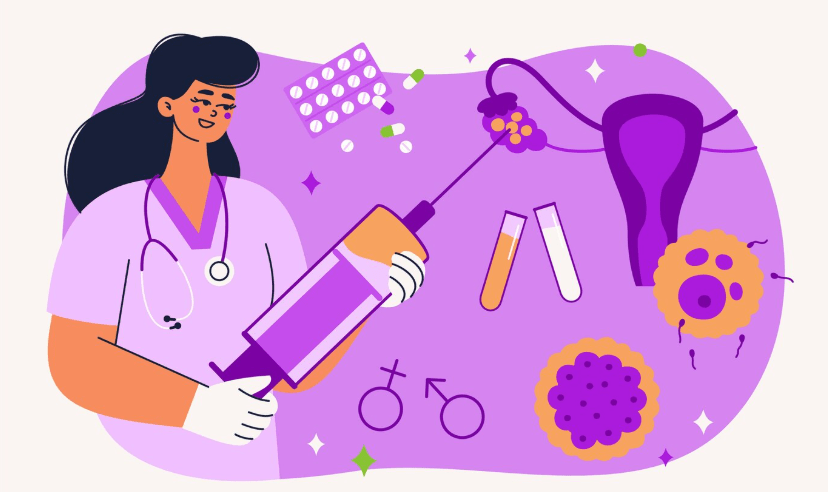
This technique is essential in animal breeding and fertility treatments, such as artificial insemination. It provides an alternative approach for circumventing reproductive difficulties in humans and livestock. Success depends on a few carefully mapped-out stages. In this post, we will explain these steps while shining a light on the nuances of the process.
Artificial Insemination (AI) Explained
AI stands for artificial insemination, which is a procedure to introduce sperm into the female reproductive tract without copulation. This method improves the chances of fertilization by depositing sperm cells where fertilization occurs by meeting the egg. Artificial insemination services have revolutionized breeding practices, providing many benefits compared to natural breeding methods, including increased genetic diversity and reduced disease transmission.
Step 1: Choosing the Donor
The first step entails finding an appropriate sperm donor. In livestock, genetic traits, health status, and performance records are all carefully considered to identify appropriate donors for breeders. Donors in human fertility treatments go through extensive screening to rule out genetic disease and also choose compatible traits. This is a very important step because it dictates how the children will be produced, that is, the quality and health of the children.
Step 2: Semen Collection
The second step, after identifying a donor, is collecting semen. In animals, this is generally done by means of a hands test or artificial vagina. In humans, masturbation or electroejaculation methods are used. The collected semen is then analyzed to assess the quality of the sperm, i.e., sperm count, motility, and morphology, to ensure maximum fertility potential.
STEP 3: Processing of Semen
Once collected, semen then undergoes processing to improve its quality. That includes filtering to eliminate contaminants, which is then diluted in a preservation medium. Sperm may be frozen sometimes for future use. Cryopreservation enables relatively long-term storage, retaining viability for months. This allows the sperm to have the potential to remain viable until insemination.
Step 4: Timing the Insemination
And timing is everything when it comes to artificial insemination success. In animals, the breeders observe the estrus cycles to identify the best time for insemination. This ensures that sperm and a mature egg can meet for fertilization. Tracking ovulation in humans, with analysis of hormonal levels or an ultrasound, is performed to determine the best time for insemination. Good timing will help you have a better chance of conceiving.
Step 5: The Insemination Procedure
The process of insemination differs slightly from species to species. In animals, a specialized device, an insemination gun, is used for depositing sperm into the uterus or cervix. In human procedures, injection of sperm occurs by gently placing sperm near the cervix or directly into the uterus using a catheter. This noninvasive technique resembles natural fertilization and causes little discomfort to the recipient.
Step 6: Monitoring and Aftercare
After insemination, it is imperative to follow up to ensure the female is pregnant. Ultrasound or blood tests show early signs of pregnancy in animals. Humans monitor pregnancy via a home test or a medical checkup. Aftercare includes supportive measures to ensure the health of the mother and the developing embryo is as good as possible.
Benefits of Artificial Insemination
There are many benefits of artificial insemination. It helps improve genetics by enabling breeders to select better traits. This technique lowers disease transmission risk by reducing animal-to-animal contact. AI offers hope to couples unable to conceive independently, providing an alternative route to parenthood in humans.
Challenges and Considerations
Artificial insemination has its advantages but also comes with challenges. The likelihood of success depends on things such as sperm quality, timing, and the health of the recipient. Ethics is a consideration, especially when it comes to use in humans, creating the problem of genetic selection and how anonymous donors should be. Overcoming these challenges comes down to appropriate planning and ethical principles.
Wrapping Up
Artificial insemination is an incredible tool in the fields of human fertility and animal breeding. Knowing its stages allows people and breeders to improve reproduction results to ensure the birth of healthy offspring. The technique is still being worked on and looks impressive, as it has so much potential in these fields.

Hey welcome to my blog . I am a modern women who love to share any tips on lifestyle, health, travel. Hope you join me in this journey!


Speak Your Mind