Key Takeaways
- Teens with autism benefit greatly from structured social skills training.
- SST can improve confidence, reduce isolation, and prepare teens for adulthood.
- It’s not about forcing neurotypical behaviors—it’s about building authentic communication.
- Real-world practice, not just classroom learning, makes the difference.
- Supportive environments that respect neurodiversity lead to better long-term outcomes.
Introduction
For many teens, socializing comes with awkward moments, trial-and-error friendships, and a steep learning curve. But for teens with autism, that curve can feel more like a brick wall.
It’s not that they don’t want to connect—they do. It’s just that reading facial cues, taking turns in conversation, or handling group dynamics doesn’t always come naturally. And that’s where social skills training steps in—not to change who they are, but to give them the tools to show who they’ve always been.
In a world that thrives on connection, let’s discuss how we can help autistic teens build meaningful, confidence-boosting relationships on their terms.
What is Social Skills Training, Anyway?
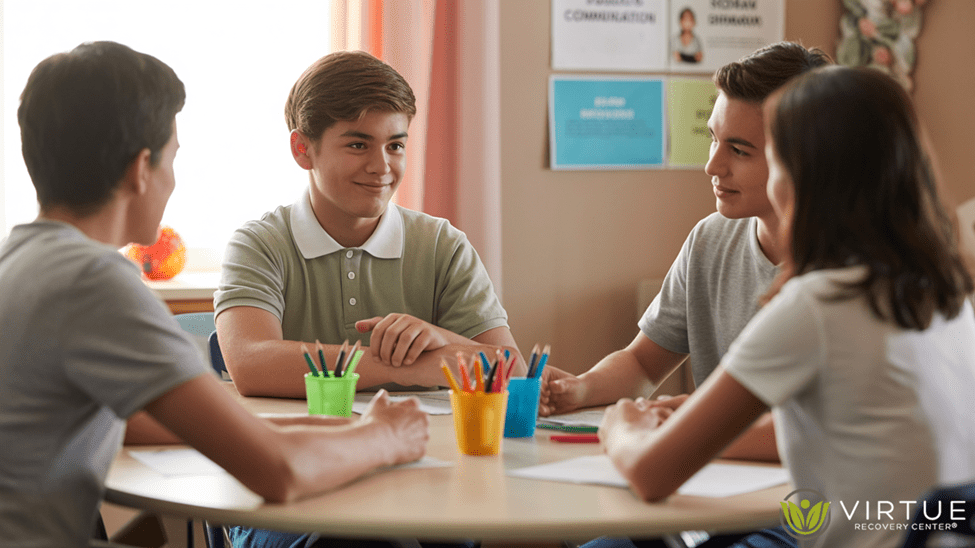
Social skills training (SST) is a therapeutic approach that helps individuals, especially those with autism spectrum disorder (ASD), learn, practice, and apply interpersonal skills in real-life situations. Think of it as a “life lab” where teens rehearse the unsaid rules of human interaction.
These programs often cover:
- Starting and maintaining conversations
- Reading facial expressions and body language
- Understanding personal space
- Handling teasing or conflict
- Managing group interactions
- Practicing empathy and perspective-taking
The best programs are customized, structured, and interactive—often using role-play, video modeling, group sessions, and real-world exposure.
Why It Matters So Much for Teens with Autism
Teenagers crave connection. And autistic teens are no different. But without guidance, repeated social failures can lead to isolation, anxiety, depression in teens, or worse, a belief that something is inherently “wrong” with them.
Here’s the truth: there isn’t.
But the world can be confusing. That’s why we don’t just “let them figure it out”—we teach, model, and support.
Social skills training can help teens:
- Build authentic friendships
- Reduce social anxiety
- Improve self-esteem
- Navigate school and extracurriculars more confidently.
- Prepare for jobs, interviews, and adult relationships.
And honestly? It gives families peace of mind too.
The Emotional Side: More Than Just Skills
Let’s step back for a second. This isn’t just about teaching teens with depression or anxiety to make eye contact or shake hands.
It’s about giving them a sense of belonging. A space where they’re not just tolerated, but celebrated. Where stimming isn’t discouraged, where questions aren’t “weird,” and where social growth isn’t rushed—it’s respected.
And when they finally click with someone—a friend, a group, a therapist—it’s not just progress. It’s magic.
Where Does It Happen?
Social skills training isn’t limited to one place. It can take many forms:
- School-Based Programs: Often run by speech-language pathologists or special education staff.
- Outpatient Clinics: Structured group sessions led by behavioral therapists.
- In-Home or Virtual Sessions: One-on-one sessions customized to specific needs.
- Specialized Residential Programs are like those offered at adolescent treatment centers, where socialization is part of the day-to-day therapeutic process.
Many teens benefit most from a combination of settings, with reinforcement at home and school.
Conclusion
Helping teens with autism develop social skills isn’t about turning them into someone they’re not. It’s about giving them the confidence, vocabulary, and freedom to be more of who they are—with fewer roadblocks.
Social skills training offers more than just practical tools. It provides hope, connection, and belonging.
Because every teen deserves that.
If your teen needs help developing social skills, contact Silver State Adolescent Treatment at 725-777-5685 today. A brighter future starts with the right support.
FAQs
Is social skills training only for teens with autism?
Not at all. While it’s especially beneficial for those on the spectrum, teens with ADHD, anxiety, or social communication difficulties can also benefit.
At what age should my teen start social skills training?
There’s no universal age, but early to mid-teens (ages 12–16) are often a great time to begin, especially as social pressures and independence increase.
What if my teen resists or doesn’t want help?
Normal. Many teens with autism are aware of their differences and may feel anxious or defensive. Start small, involve them in choosing a program, and focus on strengths, not deficits.
How long does social skills training last?
It varies. Some programs run for 8–12 weeks, while others are ongoing. Like learning a new language, consistency matters more than speed.

Hey welcome to my blog . I am a modern women who love to share any tips on lifestyle, health, travel. Hope you join me in this journey!


Speak Your Mind