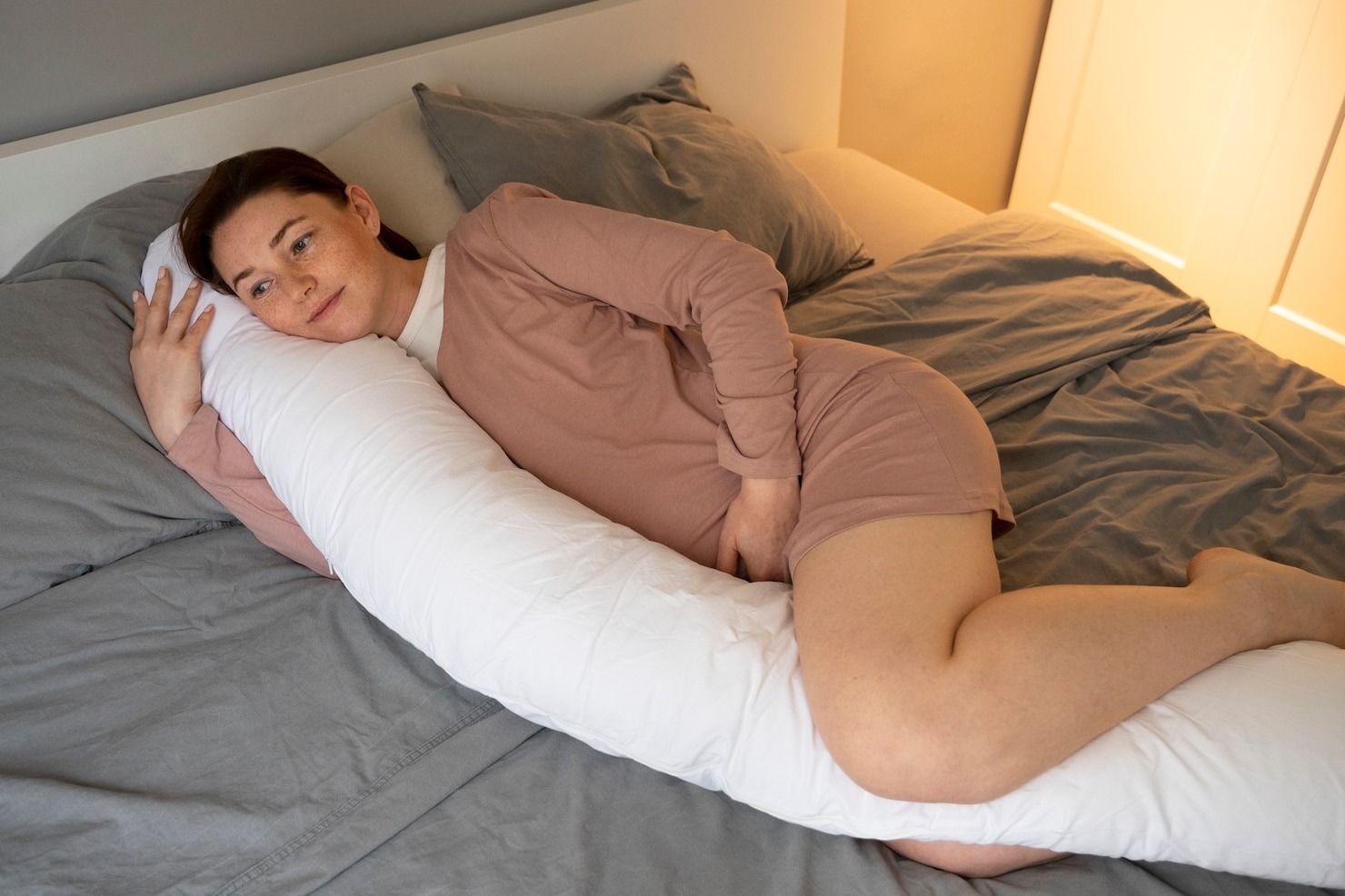
Most people think about mattresses and standard pillows when they want to improve their sleep, but there’s another part of the equation that often gets overlooked: how the rest of your body is supported once you settle in. If you’re a side sleeper, recovering from an injury, dealing with general aches and pains or simply someone who never seems to find a comfortable position, changing the way your body is supported can make a noticeable difference.
That’s where full body pillows come into the picture. Unlike a conventional pillow that only supports your head and neck, a longer body pillow can help support several areas at once, including the knees, hips, back and upper body. For some sleepers, that can make it easier to settle into a position that feels more natural rather than spending half the night rearranging cushions.
Sleep Position Matters More Than Most People Realise
We tend to think of sleep as something that simply happens once we lie down, but the way the body is positioned can have a big impact on comfort. Side sleepers, for example, often find that the knees and hips feel better when there’s something soft between the legs. Without that support, the upper leg can drop forward, twisting the pelvis and putting extra strain through the lower back.
A body pillow can help maintain a more supported position because it gives the arms and legs somewhere to rest rather than leaving them to fall wherever gravity takes them. That can be especially helpful for people who naturally curl up around a pillow or find themselves clutching a doona for support.
Back sleepers may also use larger pillows strategically, particularly beneath the knees, while people who alternate between positions can find the extra length useful because the pillow remains within reach even when they move around.
It Can Replace the “Pile of Pillows” Approach
Plenty of people already create makeshift body support without realising it. One pillow goes between the knees, another gets tucked behind the back, a third supports the arm and suddenly half the bed has disappeared under a small mountain of bedding.
That setup can work, but it often becomes inconvenient during the night. Smaller pillows shift around, fall onto the floor or end up somewhere completely different after a few hours of sleep. A longer pillow can simplify things by providing continuous support without needing to build a new arrangement every evening.
It’s also useful for people who like a more enclosed or cocooned sleeping position. Having something to lean into can feel reassuring and comfortable, particularly in a large bed where standard pillows can feel a bit isolated.
Pregnancy Isn’t the Only Time Extra Support Helps
Body pillows are often associated with pregnancy, and for good reason. As the body changes, finding a comfortable sleeping position can become increasingly difficult, especially later on when side sleeping is common and the abdomen, hips and lower back may need more support.
However, pregnancy is far from the only situation where a longer pillow can be useful. People recovering from surgery, dealing with temporary injuries or experiencing general stiffness may also appreciate additional support. Even someone with no particular health issue may simply find that they sleep better when their arms and legs aren’t collapsing into awkward positions.
The key is to think of the pillow as a comfort tool rather than a specialised medical product. It won’t solve every sleep problem, but it can help create a more supportive environment.
Size and Shape Make a Difference
Not all body pillows are designed the same way. Some are long and straight, while others are shaped to wrap around the body or support multiple areas at once. The right choice depends on how you sleep and how much space you have.
A straight body pillow is relatively simple and versatile. It can sit alongside the body, between the knees or behind the back, and it doesn’t take over the entire bed. Larger U-shaped or curved designs can provide more comprehensive support, but they naturally require more room.
Before choosing one, it’s worth thinking about whether you share the bed, how much you tend to move around and whether you want something that stays in one position or can be shifted easily.
The Filling Changes the Feel
Just like standard pillows, body pillows can feel very different depending on what they’re filled with. Some are soft and malleable, making them easy to hug and reshape, while others provide firmer support and hold their shape more consistently.
A softer pillow may suit someone who wants comfort without much resistance, whereas a firmer design can be useful if the main goal is keeping the knees, hips or back in a more stable position. There’s no universally correct choice because comfort is highly personal, and what feels wonderfully supportive to one person can feel too bulky to another.
The cover matters too, especially because a body pillow has far more surface area than a standard one. Breathable fabric and a removable, washable cover can make a noticeable difference to everyday practicality.
Better Sleep Is Usually About Small Adjustments
It’s easy to fall into the trap of thinking better sleep requires an expensive new mattress, a complicated nighttime routine or a complete bedroom overhaul. Sometimes those things help, but often the biggest improvement comes from fixing one small point of discomfort.
If you regularly wake up with stiffness, struggle to settle on your side or spend the night rearranging multiple pillows, changing the way your body is supported may be worth experimenting with. A full body pillow is a relatively simple addition, but for the right sleeper, it can make the bed feel noticeably more comfortable and supportive.
The best sleep setup is rarely about copying what works for someone else. It’s about noticing where your own body feels unsupported and making small adjustments until lying down finally feels like the easy part of the day.

Hey welcome to my blog . I am a modern women who love to share any tips on lifestyle, health, travel. Hope you join me in this journey!


Speak Your Mind