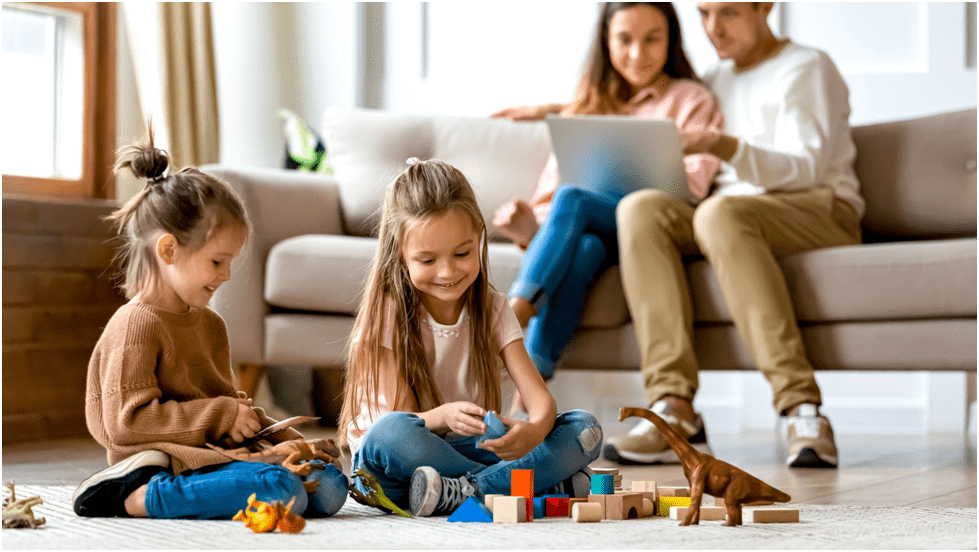
Playing is an important part of the child’s development, not only because it can help them improve their physical abilities but also because it helps to develop problem-solving skills. Through playing, children learn to cooperate with others and develop socialization skills that they may need in adulthood. Learning is a process that should be encouraged as early on as possible. It allows for curiosity, creativity and exploration which are essential factors in a child’s cognitive development. As well as providing opportunities for formal education, parents should provide informal learning experiences such as visiting cultural places or reading together.Exploring is equally valuable when it comes to promoting growth in children this could be anything from trying new activities or exploring different environments like parks or libraries; basically anything that encourages them to interact with their surroundings and learn more about the world around them. Engaging children actively through play, learning, and exploration will ensure healthy physical and mental development into adulthood.
1) Puzzle Activities
Puzzle activities are great for kids because they enhance their cognitive abilities. There are many different kinds of puzzles that can be enjoyed by youngsters, such as jigsaw puzzles, crosswords, and Sudoku. Puzzle activities can help kids learn new words and also improve their memory and problem-solving skills. They can use a word solver tool to get extra help in some difficult situations, which is very easy to use and also expands their vocabulary and understanding of how to make more and more words from the letters. Puzzles provide endless opportunities for creative discovery and exploration that allow children to develop their own unique skill sets as well as working together in teams which is essential for real life problem solving too!
2) Reading Books
Reading to your child is a wonderful way to strengthen your relationship and generate enduring memories. Not only does it promote togetherness, but books also open up new conversations between you and your little ones. With every read-through of the same story, something new can be learned or discussed. Additionally, reading books for children is an opportunity for kids to express their feelings about various topics as well as practice their listening skills. Asking questions after each page creates an even more interactive experience that can further aid in cognitive development.
3) Experiments in science
By providing your child with a variety of resources to explore, you can help them develop their scientific understanding and appreciation. One fun way to do this is to find an experiment that they’ll enjoy doing together. This could include building volcanoes out of clay or making homemade lava lamps. You could also provide simple materials for experimenting, such as magnets, plastic cups filled with different substances like food coloring or water, and small objects made out of paper or wood which they can use in experiments.Another great way to get kids interested in science is by teaching them about the importance of safety when conducting experiments. Teach your child how to be careful when handling sharp objects or dangerous chemicals so that accidents don’t occur during the experimentation process. Additionally, it’s important for your child to understand the concept behind each experiment before beginning; explain what will happen if certain parameters are changed and why scientists study these changes in order to gain a better understanding of our world and its many wonders.
4) Craft Activities
Crafts also help children learn about colors, shapes and sizes. Kids can use different colors, shapes, and sizes to create a variety of designs that they would not be able to make with just one color or shape. This helps them understand the importance of using their imagination when it comes to creating art.Finally, craft activities are an excellent way for kids to be creative. For example, if a child is making a paper airplane out of construction paper and glue sticks, they are able to let their creativity go wild by experimenting with different designs until they find the perfect combination for their plane. This teaches kids how important it is to think outside the box in order to come up with new ideas and solutions.

5) Constructing of Knowledge Activities
An indoor educational activity for kids is to have them construct something related to what they are learning. For example, if they are learning about the human body, you could have them construct a model of the skeleton of a human using craft sticks and glue. As a result, they will be better able to understand how the bones fit together in the human body.
To teach your child geography, you could have them create a map of the world using construction paper and crayons. This would help them to learn about the different continents, oceans, and countries that make up each continent.
You could also have your child create a timeline of important events in history. This would help them to understand how events are related to one another and how they have affected the world today. The better your child understands and retains the information, the more they can construct something related to what they’re learning.

Hey welcome to my blog . I am a modern women who love to share any tips on lifestyle, health, travel. Hope you join me in this journey!


Speak Your Mind