Tropical and seasonal fruits are always an amazing addition to one’s diet. They are enriched with vital nutrients and support overall physical health. However, with so many different types of fruits available, Prunes somehow manage to take the cake with their citrus and tart taste and flavor.
Prune juice is not just healthy but highly refreshing and perfect for drinking anytime for a quick pick-me-up. However, making prune juice can be a little hectic, especially if you don’t know each ingredient and quantity.
This article will walk you through every step of the Prune juice recipe and how you can make yourself a chilled, refreshing glass of the same at home.
Prune Juice Recipe
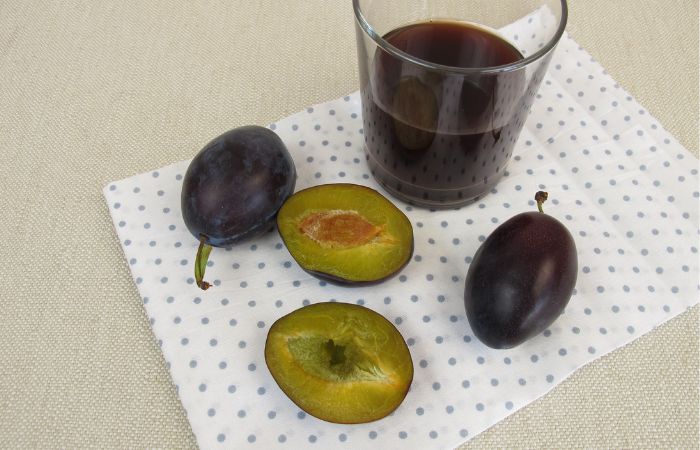
Prunes would be dried plums if that were something you were confused about. They are predominantly made with European Plums, but you will find various options in Southeast Asian countries, especially India.
Making prune juice isn’t everyone’s cup of tea. You have to find the right variety of prune and ensure it’s clean and in the best condition before you use it to extract all the juices out of it. Since prunes are typically dried fruit, reconstituting the fruit takes time too.
Also, some prunes are extremely tart and must be concentrated with sugar to mellow down the tartness. So, it isn’t surprising that your options are quite diverse in making prune juice.
Like most other citrus and tangy fruit juices, Prune juice makes a good addition to sour punch drinks. But that’s not all; the benefits of prune juice are quite promising, especially for your gut and immune health.
More on that in the next section of the article. So, scroll down.
Benefits of Prune Juice
The benefits of prune juice are quite diverse. Not only does it taste good and has a unique and sharp flavor, but the fruit is equally popular in supporting your gut health, immunity, and overall physical and physiological well-being.
Some of the top benefits include:
Support digestion with high fiber content, drinking prune juice supports digestion and relieves constipation and risks of hemorrhoids. Prunes act as laxatives, ensuring regular bowel movements. It also retains quite a good number of vitamins and minerals in them.
Control overactive bladder drinking prune juice can combat that if you tend to urinate quite frequently and have a hard time controlling your bladder. The high fiber content in the prunes can also reduce the risks of frequent urination.
High potassium the high potassium level supports heart health, promotes digestion, improves muscle contractions, and regulates blood pressure levels.
High vitamins prunes contain various Vitamins, including Vitamin A, K, B6, riboflavin, niacin, etc., all of which support optimal health and well-being.
Iron source besides vitamins, prunes are also a good source of iron that promotes red blood cell production in the body and reduces the risks of anemia.
Bone formation dried prunes and prune juice contain a mineral called boron, which builds bones and muscles in the body.
Manage cholesterol levels studies have found that prune juice and prunes, in general, can slow down the risks of atherosclerosis in individuals with high cholesterol levels.
Manage appetite prune juice is a great drink to add to your weight loss diet. It contains high fiber levels, which is easy to digest and keeps the stomach full for longer, reducing unnecessary hunger pangs.
Reduce risks of colon cancer studies suggest that drinking prune juice or eating dried plums improves and boosts the gut microbiota, reducing the risks of colon cancer.
Difference Between Plum Juice and Prune Juice
Since prunes are dried plums, confusion between plum juice and prune juice is quite common. However, there are significant differences between both that one needs to be familiar with.
When comparing the differences between these two juices, the most common one is in terms of taste and texture.
Here’s a quick breakdown:
Texture since prune juice has more fiber, it is much denser and thicker than plum juice. Also, since prunes are dried, they have less water, leading to a more dense juice texture.
Taste again, since prune juice contains the dried form of plums, it is a lot sweeter or a lot tart, depending on the taste of the plum it’s dried from. Typically, the prune juice taste is a much more concentrated version of plum juice.
Calories if you want to consume less calories, we’d recommend plum juice since it has 2x less calories than prune juice.
Vitamins since they are extracted from the same fruit, the vitamin and nutritional value are more or less the same in either case. Prune juice does lose a bit more Vitamin C concentrate during drying. With plum juice, you get the optimal dose of all the vitamins.
Antioxidants the level of antioxidants is higher in prune juice than in plum juice.
How To Make Prune Juice Taste Better?
Prune Juice is amazing just by itself. But, sometimes, it’s okay to want to try a different flavor profile. If you are thinking about how to spruce up the taste of it, we have some tips to share:
- Make a cocktail or mocktail with prune juice
- Add ice to dilute down the concentrated juice and have it chilled
- Add prune juice as a liquid into smoothies or shakes
- Sweeten it with some honey, agave, or sugar if the juice is too tart
- Add some ice and sparkling soda to add a little fizz to the drink
- Make dessert using prune juice
These are just a few ways you can spruce up the taste of your prune juice without doing much.
How to Make Prune Juice (Recipe)?
Preparing prune juice is a walk in the park. We have sorted all the details here.
Prune Juice Recipe
Making prune juice isn’t everyone’s cup of tea. You have to find the right variety of prune and ensure it's clean and in the best condition before you use it to extract all the juices out of it. Since prunes are typically dried fruit, reconstituting the fruit takes time too.
Ingredients
- Dried prunes – 7-10
- Sugar – as per taste (optional)
- Water – to blend the prunes
Instructions
- Start by filling a bowl with ½ cup warm water and add the dried prunes.
- Soak the prunes in the water for 30-40 minutes or until the prunes become soft and leak the color
- Add the soaked prunes (along with the water) into a blender
- Add 1 cup of room temperature water
- Add your sugar to it
- Blend the mixture until it reaches a smooth consistency
- Pass the juice through a sieve to filter out the thick chunks
- Strain everything to extract every last drop of the juice from the blended mixture
- Once done, serve it in a glass with some ice
Nutrition Information:
Yield: 2 Serving Size: 1Amount Per Serving: Calories: 99Total Fat: 0gSaturated Fat: 0gTrans Fat: 0gUnsaturated Fat: 0gCholesterol: 0mgSodium: 6mgCarbohydrates: 26gFiber: 3gSugar: 17gProtein: 1g
Nutrition
Calories 14 kCal
Fat 0.01 g
Sodium 9 mg
Potassium – 18 mg
Carbohydrates 4 g
Protein 0.1 g
Vitamin A 20IU
Vitamin C 0.01 mg
Calcium 6 mg
Iron 0.03 mg
And, that’s all you have to do to make your prune juice at home, fresh every time.
Can Prune Juice Help Relieve Constipation?
Prune juice has a high level of soluble fiber, which can help with bowel movement, and digestion and even relieve constipation. Since it acts as a laxative, drinking a glass of prune juice can proactively relieve constipation in most patients.
Conclusion
Given the myriad benefits of prune juice, we’d highly recommend you start adding it to your diet. However, we also hope this article gives you a basic rundown about everything you need to know concerning prune juice, its health benefits, and the recipe.

Hey welcome to my blog . I am a modern women who love to share any tips on lifestyle, health, travel. Hope you join me in this journey!


Speak Your Mind